Bone Density Testing & Osteoporosis Prevention for Women in Portland, Oregon | APEX PWR
APEX PWR | Lessons in Longevity · Women's Bone Health
Bone Density Testing and Osteoporosis Prevention for Women in Portland, Oregon
By The APEX Team | Tigard, Oregon | Serving Portland, Beaverton, Lake Oswego, Tualatin & the Metro | July 2026
Key Takeaways
Women can lose up to 20% of their bone density in the five to seven years following menopause, and the decline begins quietly in the mid-30s to 40s. Most women feel nothing until the first fracture.
One in three women over 50 will experience an osteoporotic fracture in her lifetime, a higher risk than breast cancer (International Osteoporosis Foundation).
Calcium is necessary but not sufficient. On its own it does not stop bone loss or reliably prevent fractures.
Bone responds to mechanical load. Progressive heavy strength training and impact work signal bone to hold and rebuild, a benefit shown in trials like LIFTMOR. No load means no signal.
You do not have to wait for age-65 screening or a referral. You can book a gold-standard, site-specific DEXA bone density scan directly with APEX PWR and get ahead of the loss.
Bone loss is one of the quietest threats to a woman's long-term health, and one of the most preventable. There are no symptoms while it happens. No ache, no warning, nothing to feel. For most women the first sign is a fracture, and by then the disease has been underway for years or decades.
This is a hard topic, and the facts are sobering. We are sharing them plainly because knowing them early is exactly what lets you act early. The encouraging part, and the reason to keep reading, is that bone loss is highly responsive to the right inputs. With early testing and the right training, women can protect their bones, their independence, and their longevity well before a fracture is ever on the table.
PortlandTigardBeavertonLake OswegoTualatinWest Linn
The Loss You Cannot Feel
Bone is living tissue that is constantly broken down and rebuilt. For most of early adulthood the rebuilding keeps pace. Peak bone mass arrives around age 30, and from the mid-30s onward the balance slowly tips toward loss. Then estrogen, which helps protect bone, declines through perimenopause and menopause, and the loss accelerates sharply.
The numbers are striking. Women can lose up to 20% of their bone density in the five to seven years following menopause, with some losing as much as 2 to 3% every year during that window. None of it produces a symptom. The skeleton grows more porous and more fragile silently, which is why osteoporosis is often called the silent disease.
Up to 20%
of bone density can be lost in the five to seven years after menopause.
1 in 3
women over 50 will experience an osteoporotic fracture in her lifetime (IOF).
Up to 1 in 4
older adults die within a year of a hip fracture; many survivors lose independence.
Age 65
is when screening often starts, yet loss usually began decades earlier.
One in Three Women
One in three women over the age of 50 will break a bone due to osteoporosis in her remaining lifetime. To put that in perspective, a woman's lifetime risk of an osteoporotic fracture is greater than her combined risk of breast, ovarian, and uterine cancer (International Osteoporosis Foundation). Many of these women were never told they were at risk and were never tested, because the loss was invisible the entire time it was happening.
Why "Just Take Calcium" Falls Short
For decades the standard advice was simple: drink your milk, take a calcium pill. Calcium and vitamin D are genuinely important, since they are the raw materials the body uses to build bone. The problem is that supplying raw materials is only half of the equation. Research on calcium supplementation alone shows a limited effect on preventing fractures. Materials without a signal to use them do not rebuild a skeleton. That signal comes from somewhere else.
What a Fracture Actually Costs
The reason to take silent bone loss seriously is what a major fracture does to a life. A hip fracture in particular is a turning point. Research places the one-year mortality after a hip fracture in older adults between roughly 17 and 25%, meaning as many as one in four do not survive the year. Among those who do, many never return to their prior level of function.
We share these numbers to make the stakes clear, not to frighten. The takeaway is empowering: testing and training now, while everything is still fully preventive, is what changes the outcome.
The Testing Gap
Here is the timing problem at the center of it all. Standard bone density screening frequently does not begin until age 65. But as we have seen, meaningful bone loss usually starts in the mid-30s to 40s and races ahead through the menopause transition. A first scan at 65 can only tell you how much ground you have already lost. It cannot give back the decades when you could have been acting.
The fix is straightforward: establish a baseline earlier and track it over time. A DEXA bone density scan is the gold-standard tool for this, and you do not need to wait for a milestone birthday to get one.
Bones Respond to Load
The signal that tells bone to hold and rebuild is mechanical stress. This is Wolff's law: bone adapts to the loads placed on it. Muscles pulling hard on the skeleton and forces traveling through it during impact tell the body that this bone is needed and worth maintaining. Take that stimulus away and the body has no reason to invest in keeping bone dense.
This is why nutrients alone are not enough, and why gentle movement is not enough either. The load has to be meaningful. In the LIFTMOR randomized controlled trial, postmenopausal women with low bone mass who performed supervised high-intensity resistance and impact training improved bone density at the spine and hip, and did so safely (Watson et al., 2018). The stimulus was heavy and progressive, and the bone responded.
No load, no signal. No signal, no bone. The most powerful lever most women have never been handed is progressive, heavy strength training.
The Bone-Protective Checklist
Non-Negotiables
Progressive heavy strength training. Working in challenging ranges, often around 5 to 8 hard repetitions, with load that increases over time.
Impact and force. Jumping and controlled impact loading add a bone stimulus that lifting alone does not fully cover.
Enough protein. The structural nutrient for both muscle and bone, and a common shortfall in women.
Vitamin D. Needed to absorb and use calcium. Thorne vitamin D is available at 25% off for life through apexpwr.com/thorne.
Where Advanced Women Go Further
Weighted vests to add load to everyday movement and walking.
Creatine, which, paired with resistance training, is well supported for muscle and is being studied for added benefits to bone. Thorne creatine is also 25% off for life at apexpwr.com/thorne.
Building muscle on purpose. Muscle is bone's closest ally. The stronger the muscles pulling on the skeleton, the stronger the signal to keep bone dense.
Take Your Bone Health Into Your Own Hands
You do not need a doctor's referral, and you do not need to wait on insurance approval. You can book a site-specific DEXA bone density scan directly with APEX PWR and take a proactive step for your longevity today.
Start With a DEXA Bone Density Scan
Site-specific imaging of your lumbar spine and hips, the most accurate way to assess osteopenia and osteoporosis risk and set your baseline. Book directly, no referral or insurance approval required.
One important distinction: a DEXA bone density scan is a separate test from a DEXA body composition scan. The bone density scan measures the strength of your spine and hips. The body composition scan measures fat mass, lean mass, and distribution. We offer both, and you can book them together as a package for the complete picture.
Why APEX PWR Is Portland's Proactive Choice for Bone Health
Protecting bone takes three things working together: knowing where you stand, applying the right training stimulus, and fueling the process. APEX PWR is built to do all three under one roof in Tigard.
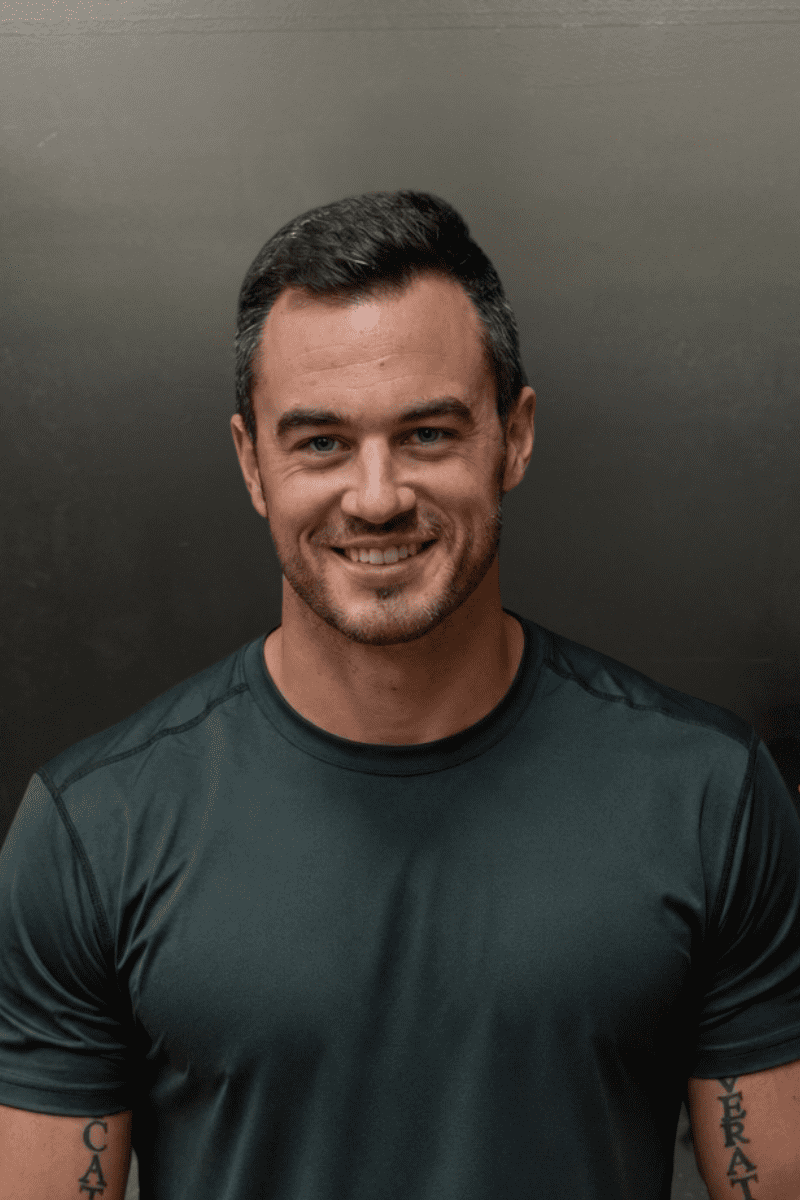
We provide gold-standard, site-specific DEXA testing so you have a real baseline. We deliver the progressive heavy strength and impact training that actually signals bone to rebuild. Our nutritionist, Jennie Carolan, MS, helps you hit the protein and nutrient targets bone needs. And you can get started with strength training in group or personal formats with Coach Colin, Coach Nicole, or another member of our coaching team.
Coach Colin
Director of Performance
A former professional baseball player who coaches adults in progressive, well-programmed strength training.
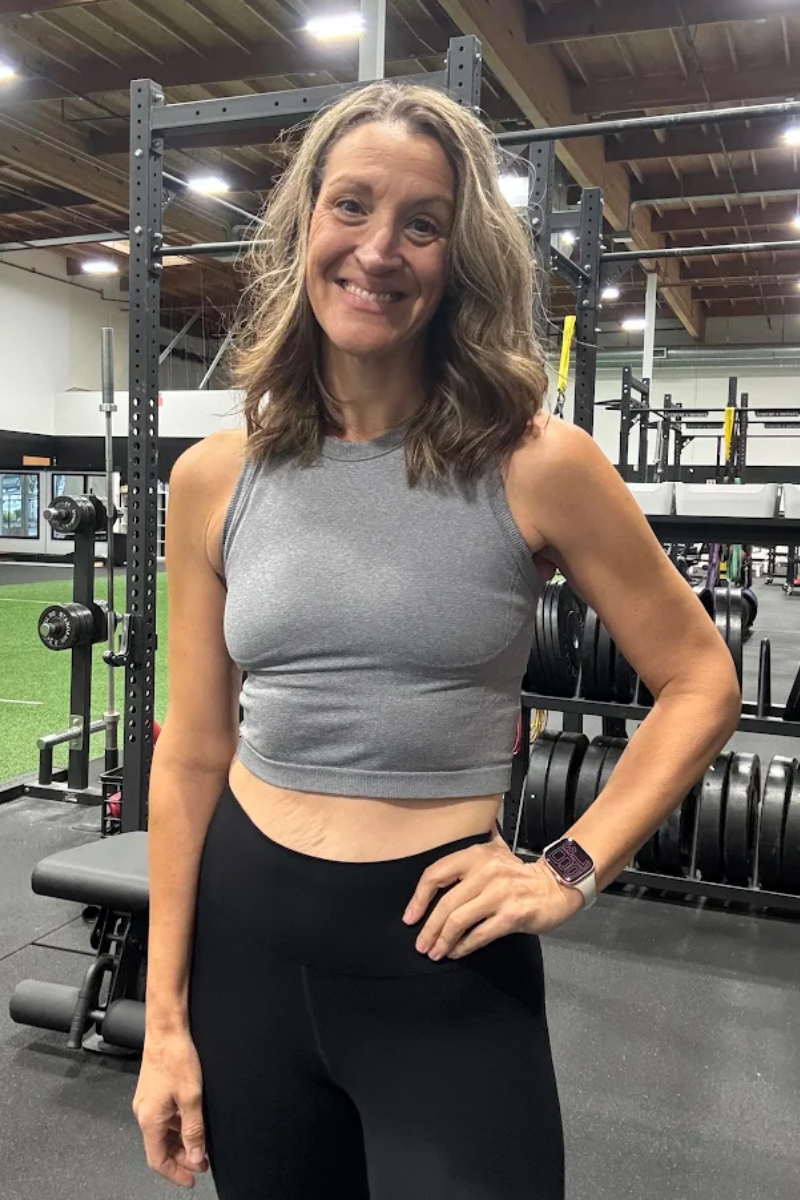
Coach Nicole
Women's Strength Coach
At 47 and navigating perimenopause herself, she coaches women through exactly these transitions.
Then Build the Bone: Start Strength Training
Book a Strength Training Foundations Trial in group or personal format and train with Coach Colin, Coach Nicole, or another coach on our team.
Disclosure: APEX PWR is an authorized Thorne dispensary and may earn a commission on products purchased through our partner link, at no additional cost to you. Your 25% lifetime discount always applies. This article is educational and is not medical advice.
Frequently Asked Questions
Do I need a doctor's referral or insurance approval for a DEXA bone density scan?
No. You can book a site-specific DEXA bone density scan directly with APEX PWR in Tigard, Oregon, with no physician referral and no waiting on insurance approval.
What is the difference between a DEXA bone density scan and a DEXA body composition scan?
They are two different scans. A DEXA bone density scan measures bone mineral density at the lumbar spine and hip. A DEXA body composition scan measures fat mass, lean mass, and distribution. APEX PWR offers both, and they can be booked together as a package.
When should women start bone density testing?
Standard screening often begins only at age 65, yet bone loss typically starts in the mid-30s to 40s and accelerates through perimenopause and menopause. Establishing a baseline earlier lets you see your trajectory and act while there is still bone to protect.
How is APEX PWR different from OsteoStrong?
OsteoStrong centers use osteogenic-loading machines and, to our knowledge, do not perform DEXA scans on site. APEX PWR pairs gold-standard, site-specific DEXA testing with progressive heavy strength training and impact work, the stimulus most supported by research such as the LIFTMOR trial.
How is APEX PWR different from DEXA Fit?
Body-composition scan providers such as DEXA Fit focus on whole-body composition and do not offer diagnostic site-specific bone density scans of the spine and hip, do not bundle testing into a package, and are not staffed by a team of clinicians, coaches, and a nutritionist to act on the results.
Get Ahead of Bone Loss Today
Book your site-specific DEXA bone density scan directly with APEX PWR, then start the strength training that protects it.
Sources: International Osteoporosis Foundation, Epidemiology of osteoporosis and fragility fractures. Cleveland Clinic; Bone Health and Osteoporosis Foundation. Watson SL, Weeks BK, Weis LJ, Harding AT, Horan SA, Beck BR (2018). High-Intensity Resistance and Impact Training Improves Bone Mineral Density and Physical Function in Postmenopausal Women: The LIFTMOR Randomized Controlled Trial. Journal of Bone and Mineral Research, 33(2), 211-220.
Strength Training for Women and Bone Density: What Perimenopause Does to Your Skeleton | APEX PWR Tigard & Beaverton APEX PWR | Female Fitness Strength Training for Women and Bone Density: What Perimenopause Actually Does to Your Skeleton By The APEX Team | Tigard & Beaverton, Oregon | October 21, 2026 Key Takeaways Bone loss
Grip Strength, Force Plates, and the Numbers That Track How You Are Aging | APEX PWR Tigard & Beaverton APEX PWR | Lessons in Longevity Grip Strength, Force Plates, and the Numbers That Actually Track How You Are Aging By The APEX Team | Tigard & Beaverton, Oregon | October 21, 2026 Key Takeaways In
6 Nutrition Label Hacks That Take 10 Seconds and No App | APEX PWR Tigard & Beaverton APEX PWR | Nutrition Nook 6 Label Hacks That Take 10 Seconds and No App By Jennie Carolan, MS, Nutrition Director | Tigard & Beaverton, Oregon | October 14, 2026 Slides from the original post by Jennie Carolan,