How to Stay the Same Weight on Vacation: Food Freedom That Travels | APEX PWR
APEX PWR | Nutrition Nook
How to Stay the Same Weight on Vacation: Food Freedom That Travels
By The APEX Team | Featuring Jennie Carolan, MS, Nutrition Coach | Tigard, Oregon | Serving Portland, Tigard, Beaverton, Lake Oswego, Tualatin, West Linn & Hillsboro | June 2026
Key Takeaways
APEX nutrition coach Jennie Carolan spent a month traveling Europe with her husband and two young children, with no tracking and no food rules, and came home the exact same weight, to the tenth of a pound.
The result was not luck and it was not "European food." It was a small set of habits strong enough to travel: a consistent breakfast, daily morning movement, three meals at steady times, water first, protein and fiber at every meal, and treats in moderation.
Food freedom is the absence of guilt and the absence of the off-track and back-on-track cycle. It is built on habits, not willpower, and it does not require a food log once the habits are in place.
Whole food is the foundation. Supplements only fill the gaps. They supplement good nutrition, they do not replace it.
The path most clients follow: learn your numbers with a One-Time Macro Breakdown, build the habits with the 12-Week Nutrition Challenge, and graduate to a lifestyle you no longer have to track.
Our nutrition coach, Jennie Carolan, MS, just spent a month in Europe. Multiple countries, a Disney cruise, her husband, and her two young kids, Thea and Oslo, the whole way. She ate the gelato. She ordered the Aperol spritz on the canal. She shared the dessert. No food log, no rules, no white-knuckling.
She came home the exact same weight. To the tenth of a pound.
If you have ever spent the last three days of a trip dreading the scale, or come home and immediately tried to "earn back" a week of eating, that sentence probably reads like a magic trick. It is not. It is the entire point of how we coach nutrition at APEX, demonstrated in the messiest, least-controlled environment there is: a month of travel with two little kids and a buffet on a cruise ship.
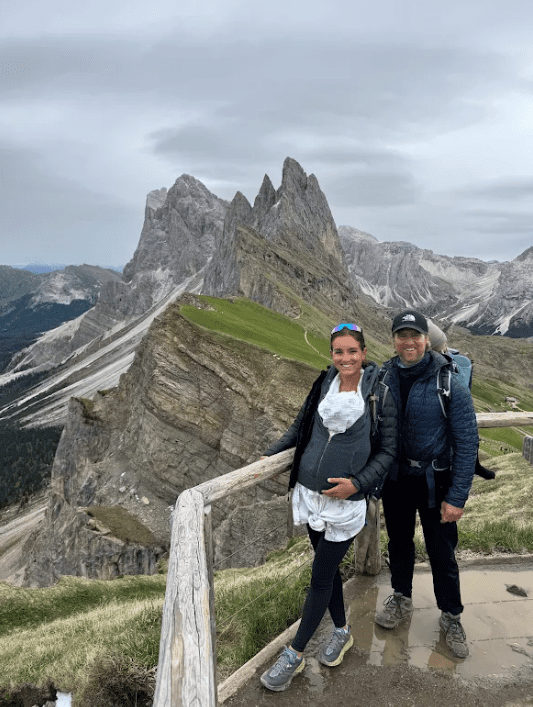
Jennie and her husband in the Dolomites. Morning movement was one of the six non-negotiable habits she kept the entire trip.
"This isn't a flex but rather proof that the principles I teach my clients actually work in real life, not just when conditions are perfect."
Jennie Carolan, MS · from her trip recap on Instagram
This happened postpartum, with two young children, in the exact season of life when most parents quietly decide their own health goes on the back burner. That is the audience we serve every day: busy parents and professionals whose health has slid down the priority list. Jennie did not pause her life to make this work. She built habits that hold up while life keeps happening.
Most people assume vacation weight gain is about the food: richer meals, dessert, drinks. The food plays a part, but the bigger driver is the disappearance of structure. At home you have a routine. On a trip, breakfast becomes whatever is at the buffet, lunch drifts into all-day grazing, the wine starts at noon, and the daily rhythm that quietly governs your intake is gone.
The most common explanation people reach for is that European food is somehow different, cleaner, less processed, magically non-fattening. Jennie heads this off directly, and with a sense of humor.
"First... I promise you it's not because 'European food is better quality.' (Although it is!) Thermodynamics still apply in Europe."
Jennie Carolan, MS
Energy balance does not check your passport. The reason she maintained was not the location. In her words, "It's because I've built habits that travel with me." That is the real lesson, and it is the one you can copy.
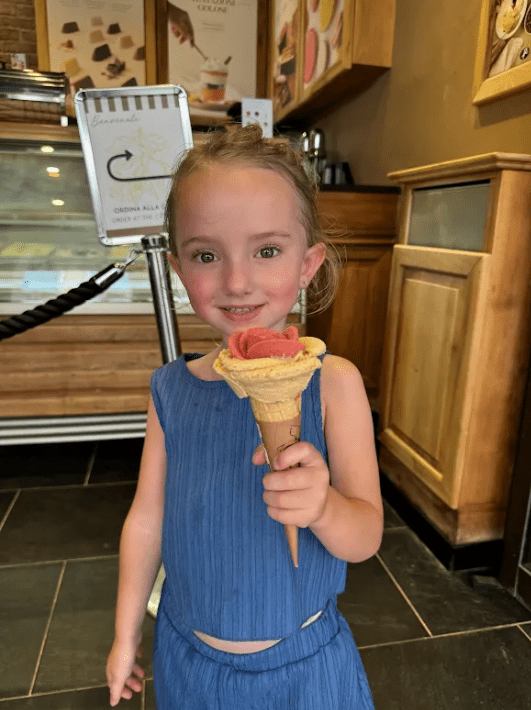
Thea with her gelato in Italy. Treats happened. They were enjoyed, not tracked, and not compensated for.
How Do You Eat Healthy on Vacation Without Gaining Weight?
You keep a small set of non-negotiable habits and let everything else be flexible. These are the six Jennie kept the entire month, straight from her recap, with the reasoning behind each one. None of them require tracking, and all of them fit in a carry-on.
01
Eat the Same Breakfast Every Day
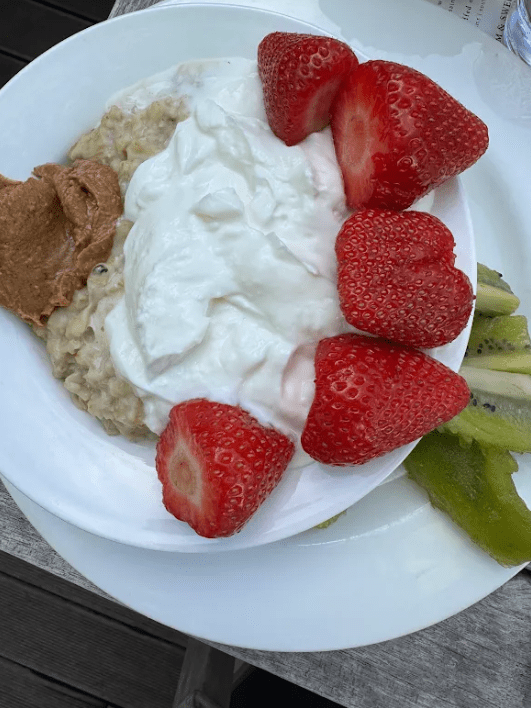
Jennie ate the same breakfast every single morning of the trip. She brought Greek yogurt and peanut butter to the buffet and added fruit and oatmeal. As she put it: "Breakfast sets the tone for the day and easiest meal to keep macros focused."
One repeatable, protein-forward breakfast removes the first decision of the day and starts you anchored. When the first meal is handled, the rest of the day has a foundation to build on instead of starting from zero.
The same breakfast, every morning of the trip: Greek yogurt, peanut butter, oatmeal, and fruit. Simple, repeatable, and protein-forward.
02
Move Your Body in the Morning
She moved every morning, and she is honest about why. "Not to burn off gelato but more so for my mental health." On top of the intentional movement, the family walked everywhere, which she notes "adds up more than you think."
This is non-exercise activity at work. A walkable city quietly stacks thousands of steps a day, and morning movement is more about setting a steady, low-stress tone than punishing yourself for a treat. Movement as a daily input, not a penalty.
03
Eat Three Meals at Roughly the Same Times
Three meals a day, at roughly consistent times. Jennie's framing: "Our bodies thrive on rhythm. Circadian biology is real. Meals over snacks and structure over grazing."
Structure beats grazing for most people because all-day snacking makes intake nearly impossible to feel, let alone manage. Defined meals give the day a rhythm, keep hunger predictable, and stop the slow drift of calories no one remembers eating.
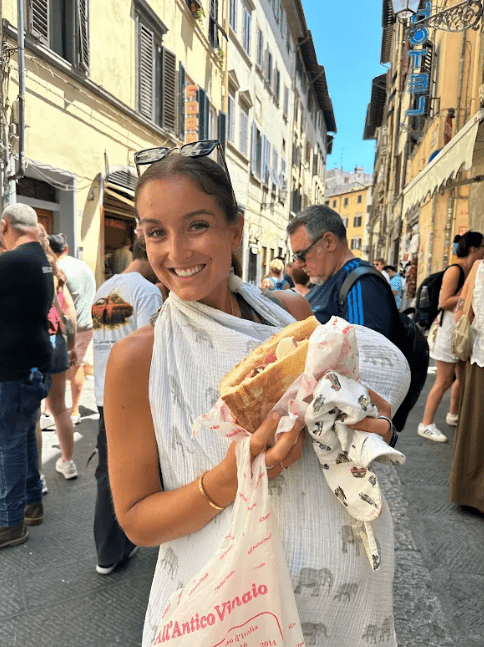
Lunch in Florence — a sandwich from All'Antico Vinaio with Oslo in tow. Three real meals, eaten at consistent times, every day of the trip.
04
Drink Water First
She drank a ton of water, especially while walking in the heat. Her reasoning lines up with what we tell clients constantly: "Hydration keeps hunger signals clear and energy steady. We so often confuse hunger for dehydration."
Thirst and hunger cues overlap, and a large share of between-meal "hunger" on a hot travel day is really thirst. Staying ahead of it keeps energy steady and cuts the unnecessary snacking that derails an otherwise good day.
05
Anchor Every Meal in Protein and Fiber
This is the one that lets the pizza stay on the table. Jennie anchored every meal in protein and fiber. Her example: "pizza was paired with a salad and chicken." Pizza was not the problem to be eliminated. It was one component of a balanced plate.
Protein is the most satiating macronutrient and protects lean muscle. Fiber slows digestion and increases fullness at a low calorie cost. Lead a meal with both and you naturally moderate everything else without counting a thing. This is the same idea our team teaches as the Core Four: build the meal around protein, a carb, a fat, and fiber.
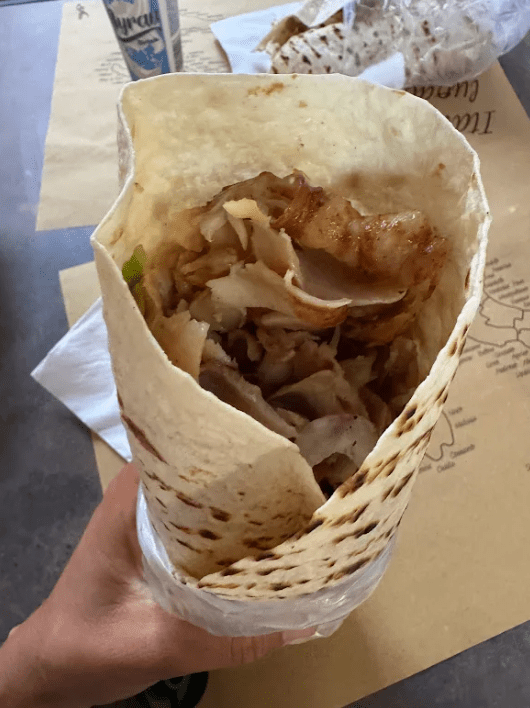
Chicken gyro on the road. Protein and fiber first, then enjoy everything else around it. No tracking required.
06
Enjoy Everything, in Moderation
Nothing was off limits. Dessert happened, but she shared it instead of ordering her own. The spritz on the canal happened too, obviously. The line she draws is the one worth memorizing: "Moderation isn't restriction. It's just not going overboard! 80/20."
This is the difference between a sustainable approach and a diet. Eighty percent of the time the habits run the show. Twenty percent of the time you fully enjoy the moment, with no guilt attached. Sharing a dessert rather than skipping it is freedom and moderation at the same time.
What Does Food Freedom Actually Mean?
The phrase gets used a lot, so it is worth defining precisely. Food freedom is not eating whatever you want with no consequences. It is the freedom from guilt, from restriction, and from the exhausting off-track and back-on-track cycle that defines most people's relationship with food.
Jennie said it the way we wish everyone understood it: "No guilt and no compensation. No 'getting back on track' when I got home." There was nothing to get back on track from, because she never went off it. The habits did not take a vacation, so neither did her results.
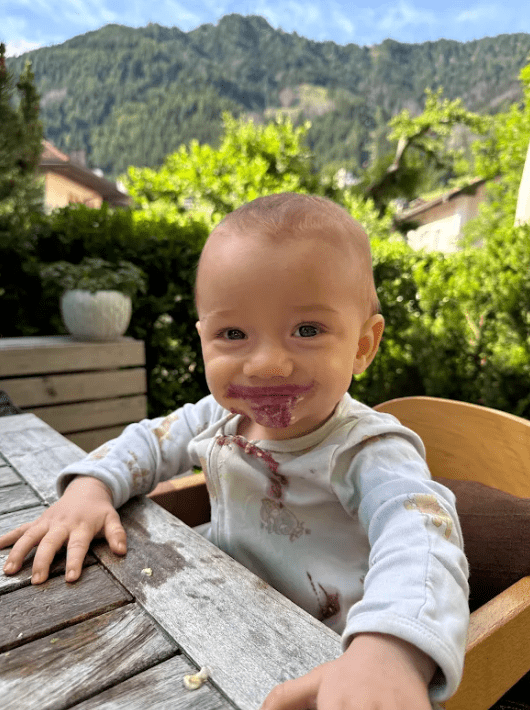
Oslo enjoying a meal in the Alps. The whole trip happened with two young kids in tow — proof that these habits survive the messiest real-life conditions.
This is what food freedom actually looks like. Not tracked macros on vacation. A lifestyle you can take anywhere.
Should You Track Macros or Build Habits?
We are not anti-tracking. Tracking macros is one of the best teaching tools there is. It shows you what a balanced plate actually looks like and how much protein you are really eating. But it is a tool, not a life sentence. The goal is to learn the lessons so well that the habits run on their own, the way Jennie's did across an entire month abroad without logging a single meal.
Think of it as a progression. Track at the start to learn your numbers and calibrate your eye. Then let the habits take over so the food log becomes optional. Most people never need to track forever. They need to track long enough for the lessons to stick.
A perfect example of why learning to read food, not just track it, matters. The "net carb" math on those 70-calorie bagels is not what it seems.
What Foods Should You Build Your Meals Around?
If habits beat tracking, the next question is which foods to build those habits around. The short version: mostly whole foods, enough protein, plenty of fiber, and a pattern you can repeat. The research on longevity points the same direction, rewarding consistent patterns of nutrient-dense food rather than any single miracle item.
The honest breakdown of the viral "minutes of life" study. Spoiler: it is less about one magic food and more about what it replaces, which is the same lesson as eating well on vacation.
The thread connecting all of it is consistency. A good vacation week, a good longevity pattern, and a good week at home are built from the same parts: protein, fiber, whole foods, repeated often enough to stop being a decision.
Do Supplements Actually Work, or Should You Get Nutrition From Food?
This question comes up constantly, and our stance is simple. Whole food is the foundation. No supplement replaces a diet built on adequate protein, fiber, and a variety of real food. The word "supplement" is the whole point: it supplements a solid base, it does not become the base.
That said, a few well-chosen supplements earn their place by filling specific, common gaps. Vitamin D in low-sunlight climates. Omega-3s if you do not eat fish. Creatine for strength and lean mass. Magnesium for sleep and recovery. The order of operations matters: get the food right first, then layer supplements on top to cover what the diet genuinely misses. When you do supplement, quality and third-party testing are worth paying for, because the supplement industry is loosely regulated and label accuracy varies widely.
Where APEX members save on supplements
For the gaps worth filling, we partner with Thorne, a pharmaceutical-grade, third-party-tested brand. APEX clients get a lifetime 25% off Thorne products. Food first, always. Then supplement smart, and do not overpay for quality when you do.
Jennie Carolan holds a Master of Science in Food Science and Nutrition and leads the nutrition coaching practice at APEX PWR. Her coaching framework centers on eating as much as possible while progressing toward body composition goals, building sustainable habits that hold up in real life rather than only under perfect conditions. She works with clients across the Portland metro area, and occasionally from a cruise ship in the Mediterranean.
How Do You Build Your Own Portable Nutrition Foundation?
You do not have to reverse-engineer this on your own. The path our clients follow is built to take you from guessing, to knowing your numbers, to no longer needing them. Three options, in the order most people move through them.
Start Here
One-Time Macro Breakdown
A single session to translate your goals, body, and lifestyle into specific daily targets for protein, carbohydrates, and fats. This is your starting line: the real numbers behind the habits, so "protein and fiber at every meal" stops being a slogan and becomes a plan you can actually execute.
Your macro breakdown plus twelve weeks of progressive nutritional education, structure, and support from Jennie along the way. This is where the numbers become habits. Regular check-ins, accountability, and the coaching that turns a one-time plan into the kind of foundation that travels with you, exactly like the one Jennie leaned on in Europe.
Fully individualized, ongoing nutrition coaching for clients who want Jennie's direct, dedicated attention over the long term. This is the highest level of support we offer: a private coaching relationship for complex goals, demanding schedules, and people who want a true expert in their corner for the long haul. Availability is intentionally limited to protect the depth of each engagement.
How do you eat healthy on vacation without gaining weight?
You do not need to track or restrict on vacation to maintain your weight. Keep a small set of non-negotiable habits that travel with you: a consistent high-protein breakfast, moving your body each morning, eating meals at roughly the same times, prioritizing water, anchoring every meal in protein and fiber, and enjoying treats in moderation rather than going overboard. These habits hold your intake steady without a single tracked macro, which is how Jennie Carolan, MS, maintained her weight to the tenth of a pound across a month in Europe.
Why do people gain weight on vacation?
Most vacation weight gain comes from the absence of structure rather than the food itself. Routines disappear, meals become all-day grazing, alcohol and dessert stop being occasional, and movement often drops. Energy balance still applies on vacation. People who maintain their weight while traveling usually keep a few simple habits in place, like a consistent breakfast, regular meal timing, daily movement, and protein and fiber at each meal.
Should you track macros or build habits?
Tracking macros is a useful learning tool, especially early on, because it teaches you what balanced portions actually look like. The long-term goal is for that knowledge to become automatic habits you no longer have to track. At APEX PWR, most clients start with a One-Time Macro Breakdown to learn their numbers, then progress through the 12-Week Nutrition Challenge to turn those numbers into habits that no longer require a food log.
What does food freedom mean?
Food freedom means eating without guilt, restriction, or the cycle of getting off track and then getting back on. It is built on a foundation of consistent habits strong enough that an indulgent meal, a dessert, or a vacation does not derail you. It is not a diet you go on and off. It is a sustainable lifestyle you can take anywhere.
Do supplements actually work, or should you get nutrition from food?
Whole food is the foundation of good nutrition and no supplement replaces a diet built on adequate protein, fiber, and a variety of whole foods. Supplements fill specific gaps such as vitamin D in low-sunlight climates, omega-3s, or creatine. They are a complement to good eating, never a substitute for it. Choose third-party tested, pharmaceutical-grade products when you do supplement.
Why does protein and fiber at every meal help with weight?
Protein is the most satiating macronutrient and helps preserve lean muscle, while fiber slows digestion and increases fullness at a low calorie cost. Anchoring every meal in protein and fiber keeps hunger signals steady and naturally moderates how much of everything else you eat, without counting calories. This is why you can pair pizza with a salad and chicken and still feel in control of the meal.
Ready to Make Nutrition a Lifestyle, Not a Diet?
Consistency, not perfection. Anywhere in the world. Start with the numbers and let our team help you build the rest.
Quoted material is drawn from Jennie Carolan's public Instagram post and caption published in collaboration with the APEX PWR account. Supporting references: Leidy HJ, Clifton PM, Astrup A, et al. (2015). The role of protein in weight loss and maintenance. American Journal of Clinical Nutrition. Clark MJ, Slavin JL (2013). Effects of dietary fibre on subjective appetite, energy intake and body weight: a systematic review of randomized controlled trials. Journal of the American College of Nutrition. Hamasaki H (2016). Daily walking and the risk of incident type 2 diabetes and all-cause mortality. World Journal of Diabetes. Affiliate disclosure: APEX PWR has a partnership arrangement with Thorne; the lifetime 25% discount is available to APEX clients.
Image upload note for WordPress: upload the following to the Media Library and replace the src URLs in this file before publishing — mountains-in-the-background.png, her-daughter.png, yogurt.png, her-holding-her-son.png, pita-gyro.png, her-son.png.
Strength Training for Women and Bone Density: What Perimenopause Does to Your Skeleton | APEX PWR Tigard & Beaverton APEX PWR | Female Fitness Strength Training for Women and Bone Density: What Perimenopause Actually Does to Your Skeleton By The APEX Team | Tigard & Beaverton, Oregon | October 21, 2026 Key Takeaways Bone loss
Grip Strength, Force Plates, and the Numbers That Track How You Are Aging | APEX PWR Tigard & Beaverton APEX PWR | Lessons in Longevity Grip Strength, Force Plates, and the Numbers That Actually Track How You Are Aging By The APEX Team | Tigard & Beaverton, Oregon | October 21, 2026 Key Takeaways In
6 Nutrition Label Hacks That Take 10 Seconds and No App | APEX PWR Tigard & Beaverton APEX PWR | Nutrition Nook 6 Label Hacks That Take 10 Seconds and No App By Jennie Carolan, MS, Nutrition Director | Tigard & Beaverton, Oregon | October 14, 2026 Slides from the original post by Jennie Carolan,