How to Track Calories When Eating Out: The Logging Mistakes That Add Up | APEX PWR
APEX PWR | Nutrition Nook
How to Track Calories When Eating Out: The Logging Mistakes That Add Up
By The APEX Team | Portland Metro | July 2026
Expert Contributor
Jennie Carolan, MS, Nutrition Coach. Jennie coaches busy adults, mothers, and women in perimenopause on proactive nutrition. The example below comes from her own logged restaurant dinner.
Key Takeaways
Eating out is usually far more calories than it looks, mostly from cooking oil, larger portions, and extras that never get logged.
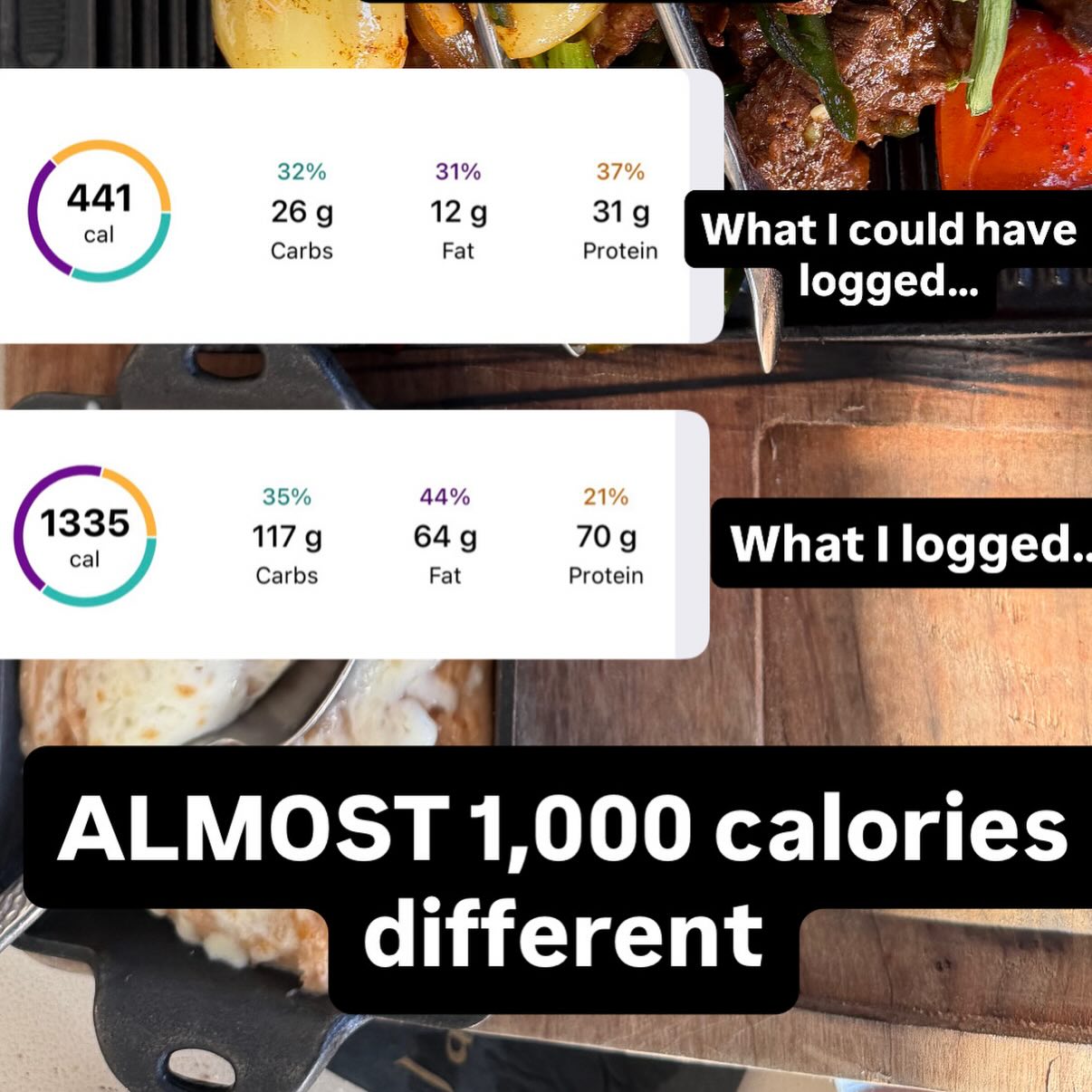
Our nutritionist logged the same fajita dinner two ways. The careful version came out almost 1,000 calories higher than the casual one, from about 441 to roughly 1,335.
The biggest tracking mistakes: choosing entries with no cooking oil, underestimating portions, skipping extras and sides, mis-logging alcohol as calories only, and ignoring little bites.
A verified or green-check database entry is not your restaurant's recipe. When in doubt, log the higher-calorie version.
You can eat out and still hit your goals. The difference is planning proactively instead of reacting after the meal.
You order something that looks reasonable, log what you think you ate, and your day still fits your targets. Then the scale does not move. For a lot of people who eat out even a couple of times a week, this is the hidden reason, and it comes down to how the meal gets logged.
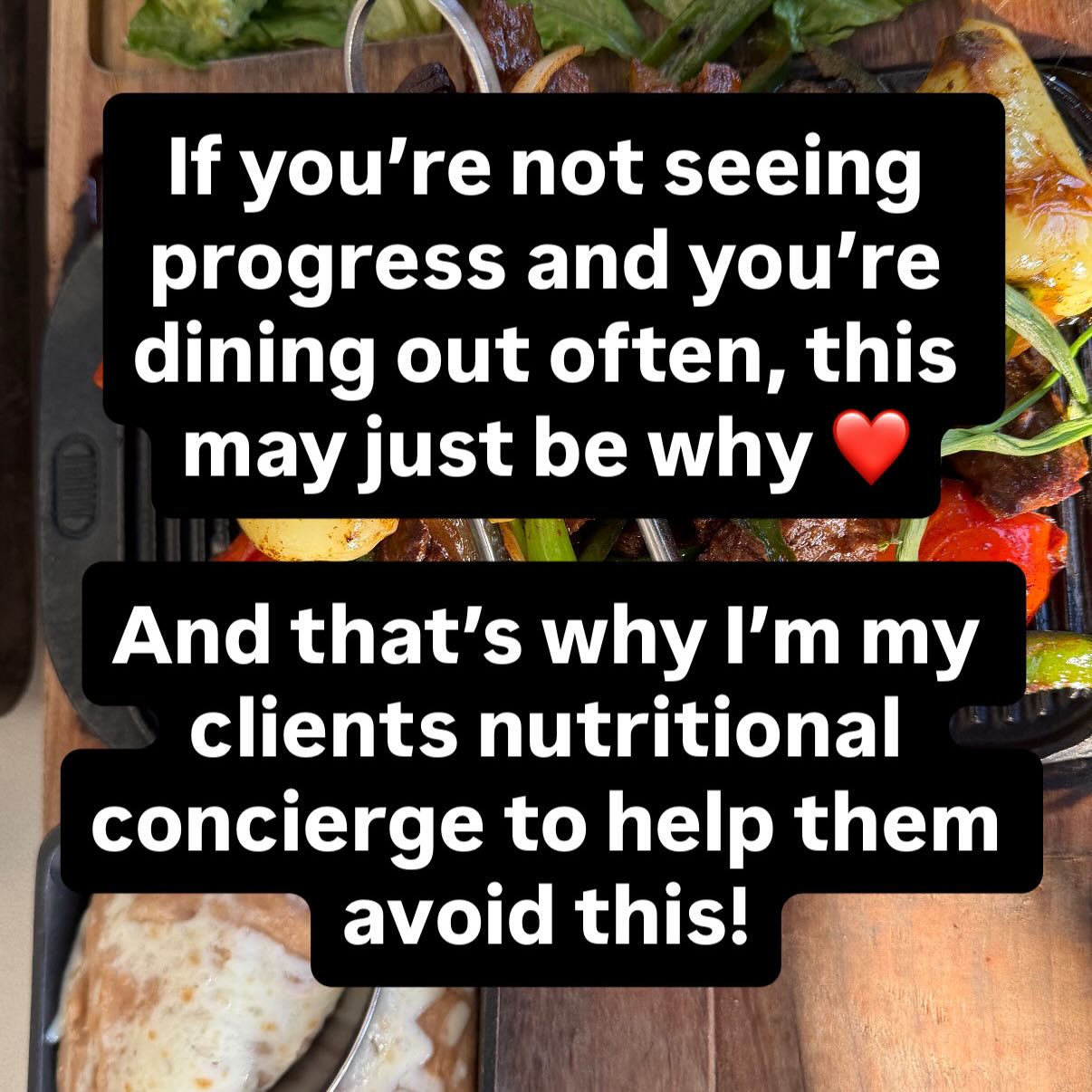
Our nutrition coach, Jennie Carolan, MS, recently broke this down using her own restaurant dinner, a plate of steak fajitas. She logged it two ways: the casual version most people would enter, and the accurate version she actually used. The gap between them is eye-opening, and every mistake in between is one you can fix tonight.
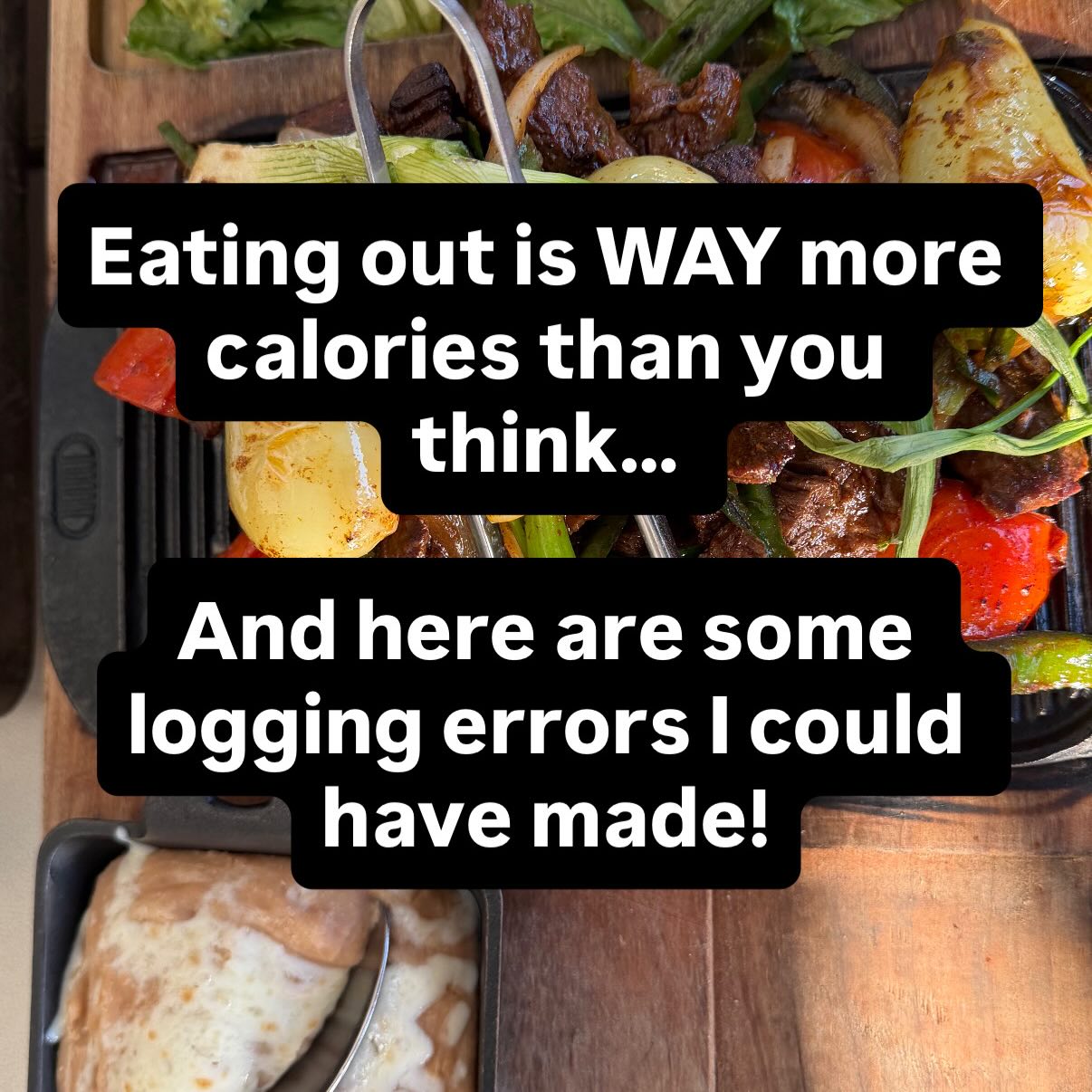
"Eating out is WAY more calories than you think. Here are some logging errors I could have made."
Jennie Carolan, MS
The dinner in question. A steak fajita plate that logs very differently depending on how it gets entered.
Mistake 1: Assuming the Lean Version
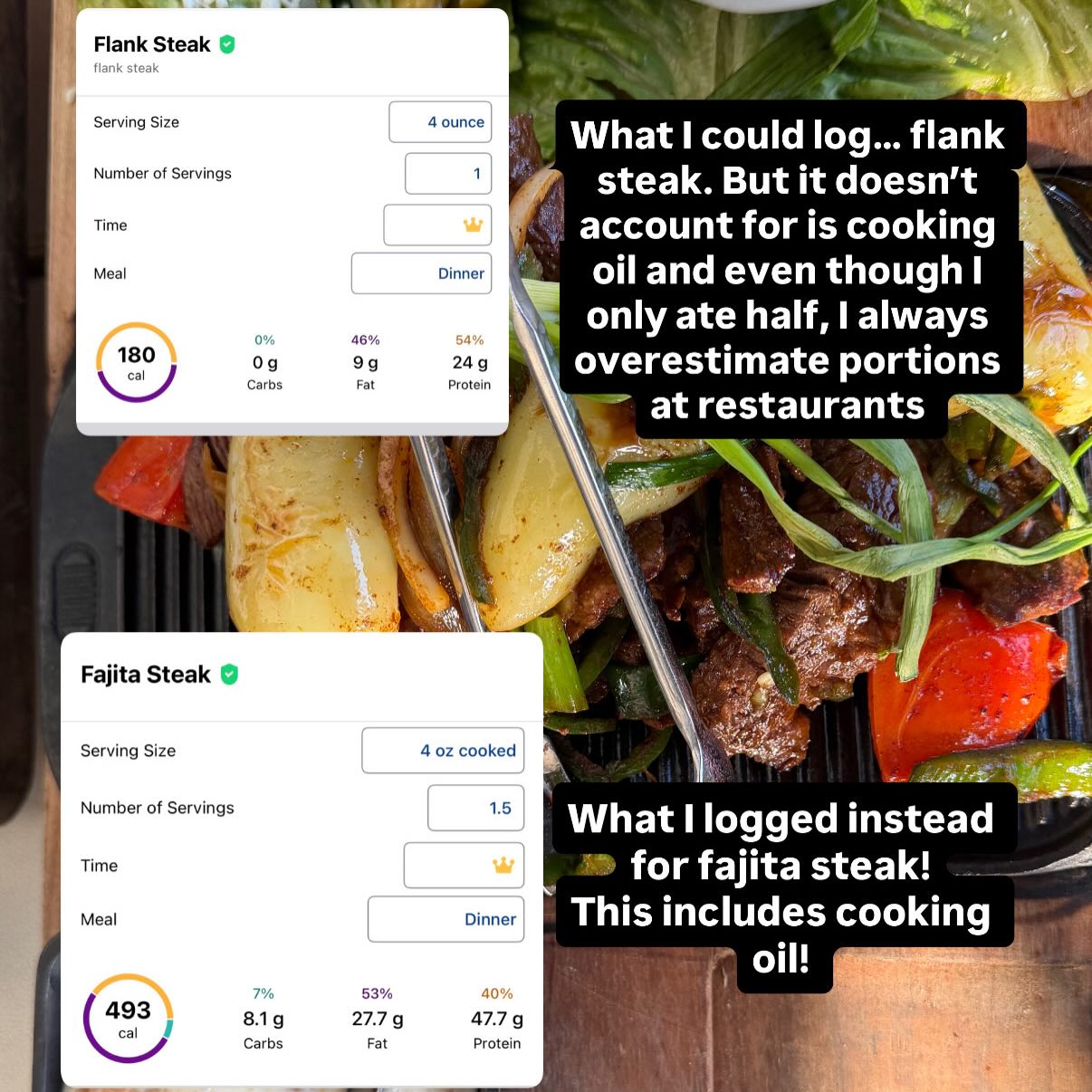
The first trap is logging the cleanest-looking version of a food. For the steak, the easy entry was a plain flank steak, 4 ounces, 180 calories. The problem is that a restaurant does not cook a dry piece of steak. It is cooked in oil, often a lot of it.
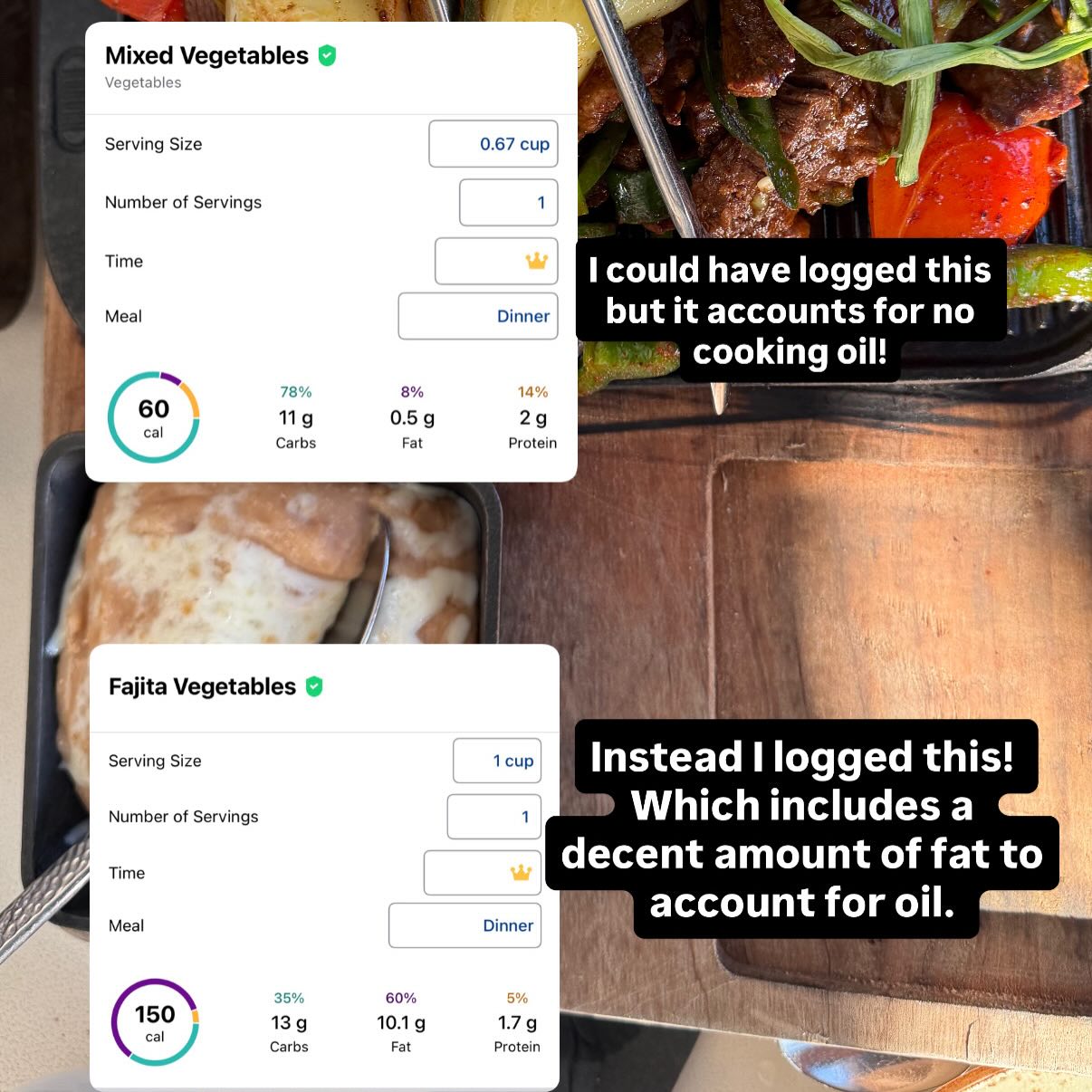
So Jennie logged a fajita steak entry instead, at 4 ounces cooked and 1.5 servings, which came to 493 calories and included the cooking oil. She also rounded the portion up rather than down, because, as she puts it, she always overestimates portions at restaurants. The same logic applied to the vegetables: the plain mixed-vegetable entry showed 60 calories and accounted for no oil, so she logged fajita vegetables at 150 calories to capture the fat the veggies were cooked in.
The Easy (Wrong) Log
180 + 60
Plain flank steak and mixed vegetables. No cooking oil. Portions rounded down.
What She Actually Logged
493 + 150
Fajita steak and vegetables that include cooking oil, with portions rounded up.
Plain flank steak with no oil (180 cal) beside the fajita steak entry that includes cooking oil at 1.5 servings (493 cal).
Plain mixed vegetables (60 cal, no oil) beside fajita vegetables logged to account for the cooking fat (150 cal).
Mistake 2: Forgetting the Extras
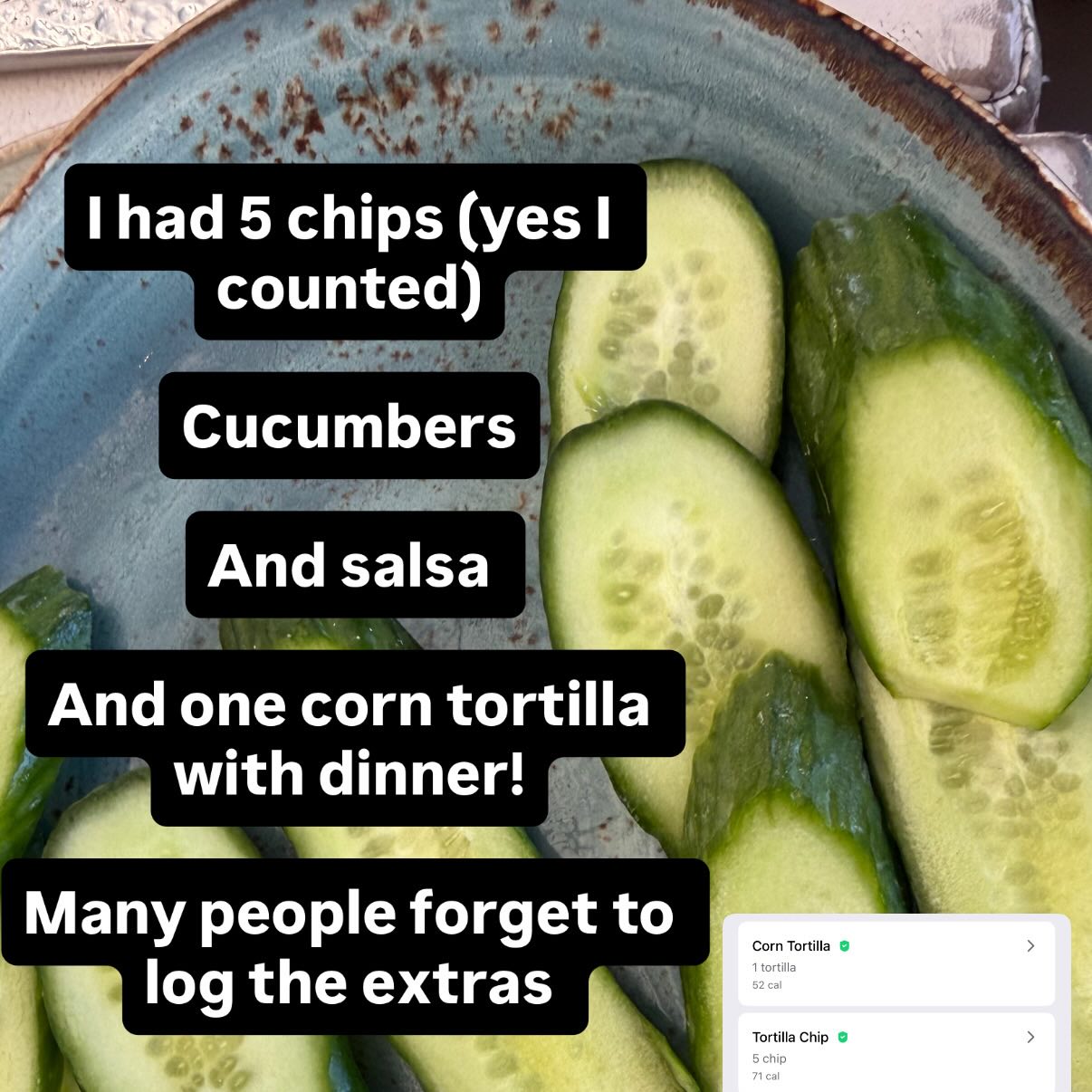
The plate is rarely just the entree. Jennie counted 5 chips (yes, she counted), some salsa, cucumbers, and one corn tortilla with dinner. None of those feel worth logging in the moment, which is exactly why they get skipped.
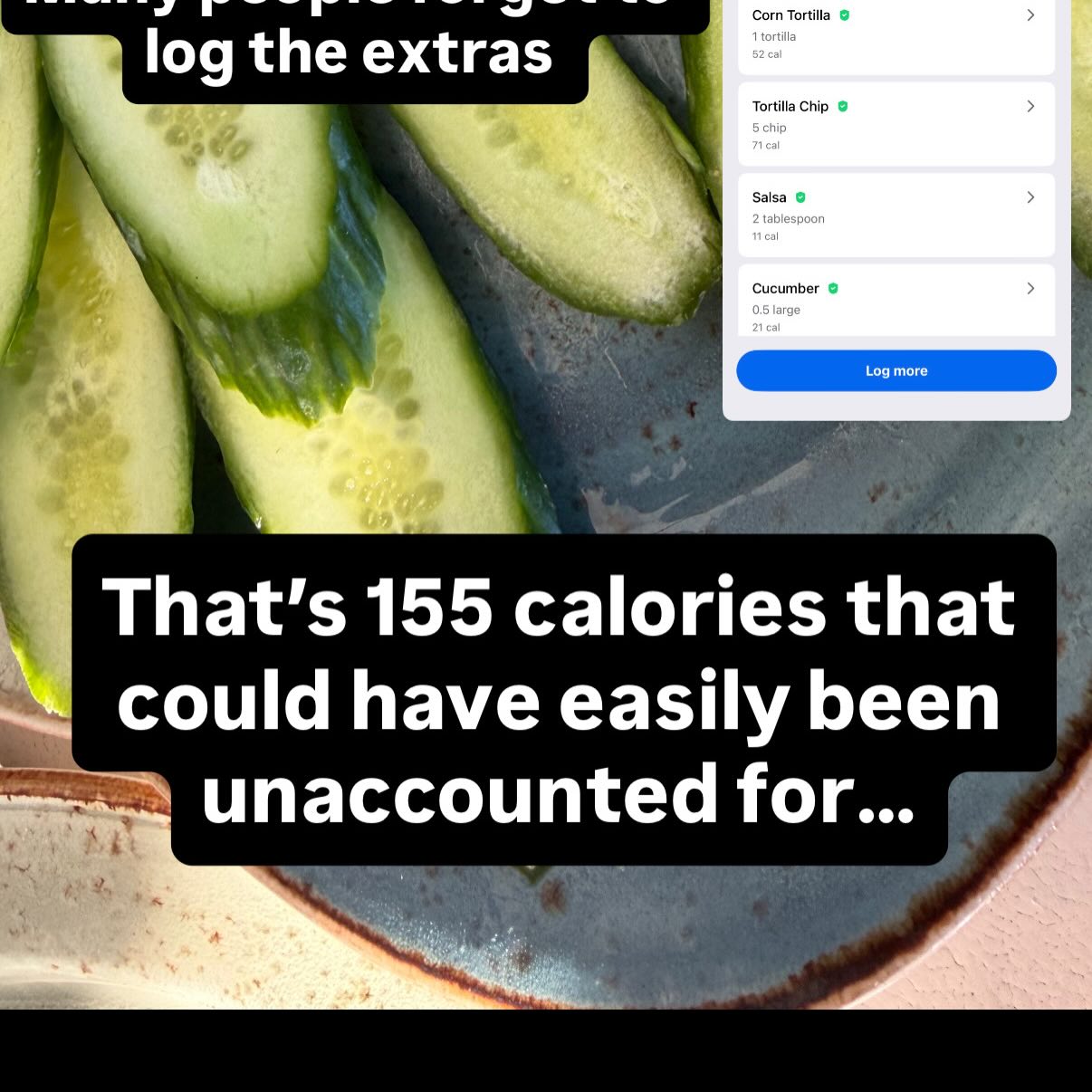
Added up, they were not nothing: the corn tortilla at 52 calories, the 5 tortilla chips at 71, the salsa at 11, and the cucumber at 21.
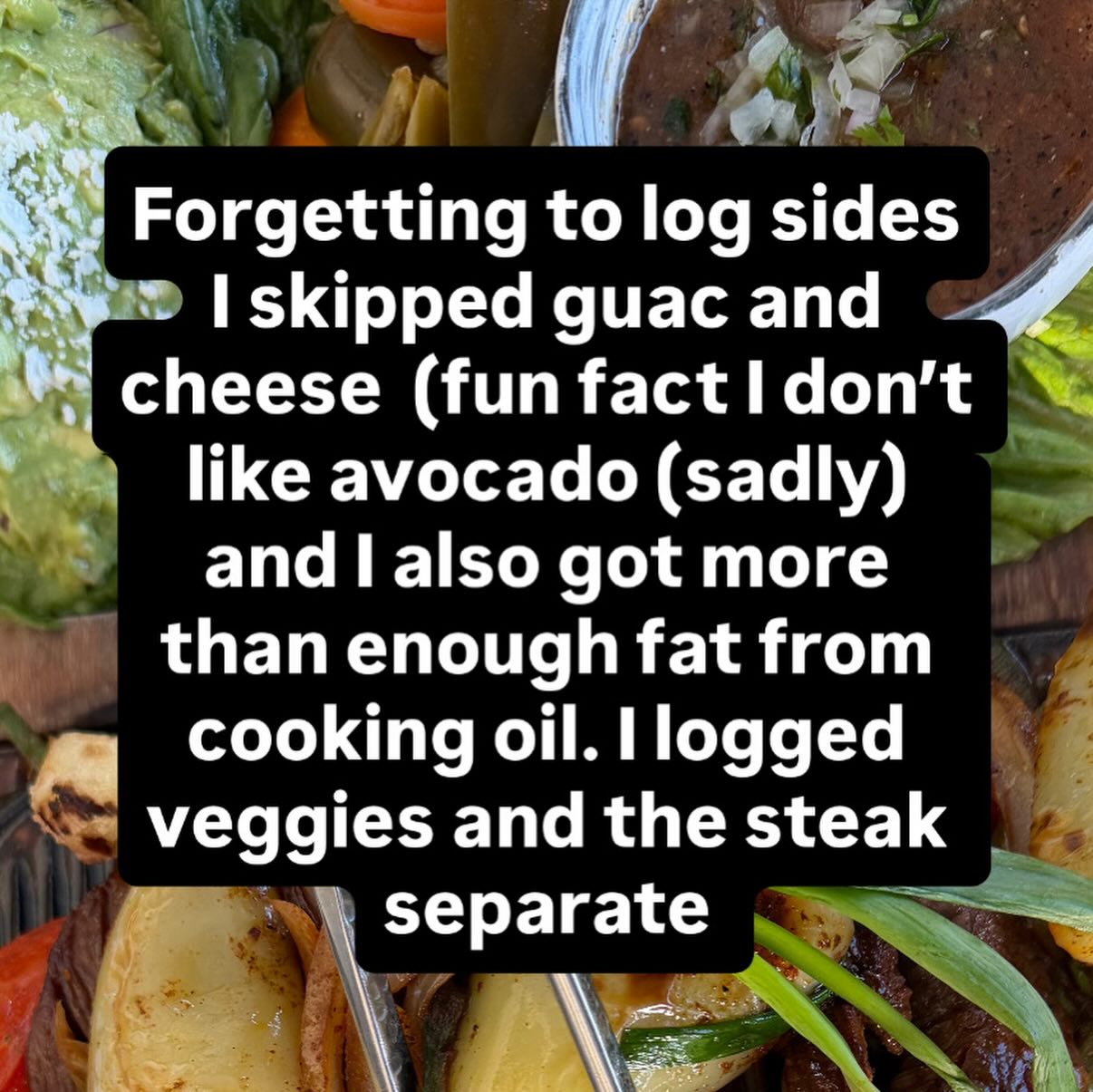
That is 155 calories from "just the extras" that could have easily gone unaccounted for. She also skipped the guacamole and cheese, and logged the veggies and steak separately so nothing hid inside a combined entry.
The easy-to-forget extras, logged out: corn tortilla (52), 5 tortilla chips (71), salsa (11), and cucumber (21), about 155 calories together.
Mistake 3: The Green-Check Trap
Many tracking apps show a verified badge, a green check, next to database entries. It feels trustworthy, and that is the danger. A verified entry is only as accurate as the food it describes, and it is almost never your specific restaurant's recipe.
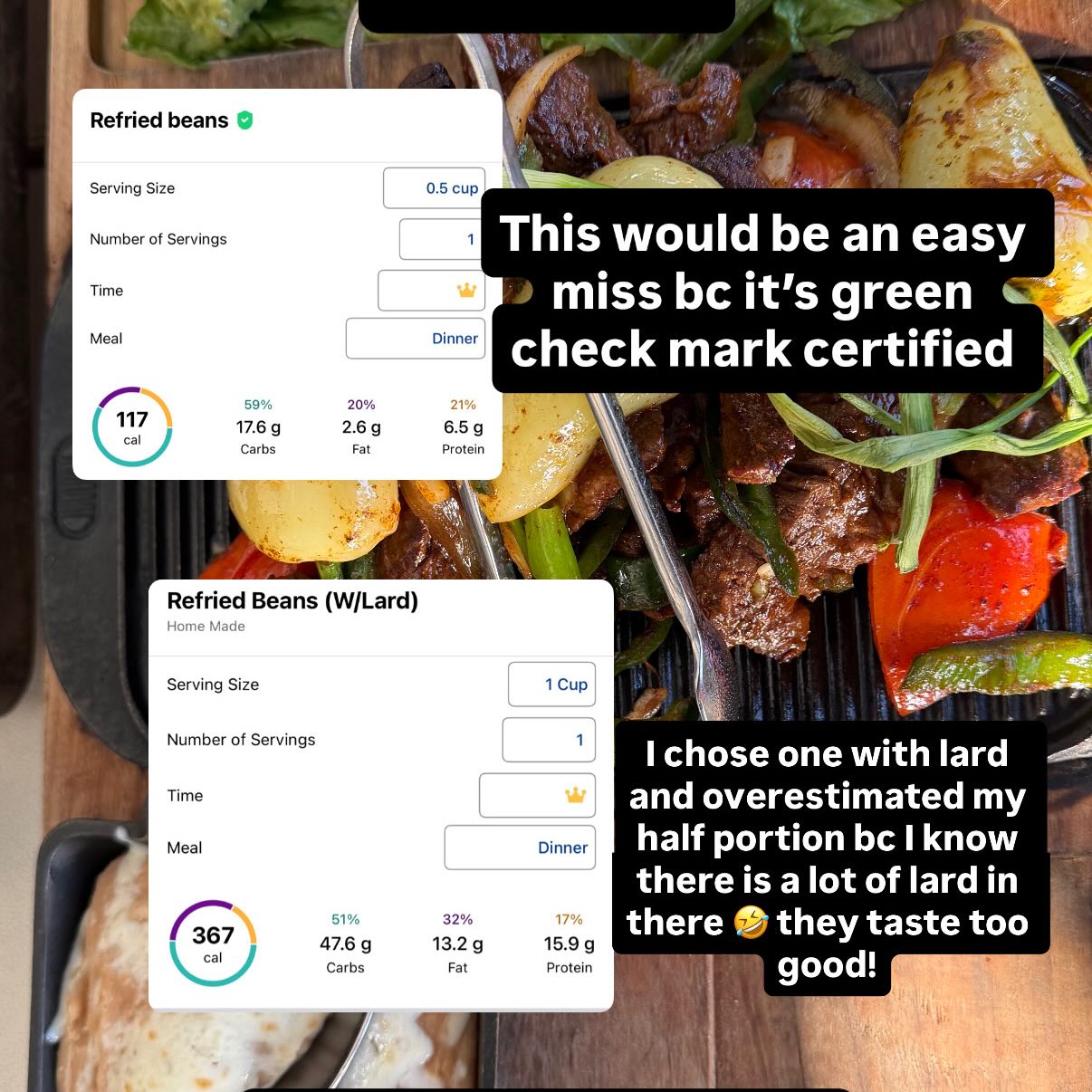
The refried beans are the perfect example. A green-check-certified refried beans entry showed a tidy 117 calories for half a cup. Jennie chose a homemade refried beans with lard entry instead, and even rounded her half portion up, at 367 calories, because she knows restaurant beans are cooked with a lot of lard. Same food name, three times the calories.
A green-check-verified refried beans entry (117 cal) beside a homemade with-lard entry at a rounded-up portion (367 cal).
Mistake 4: Logging Alcohol as Calories Only
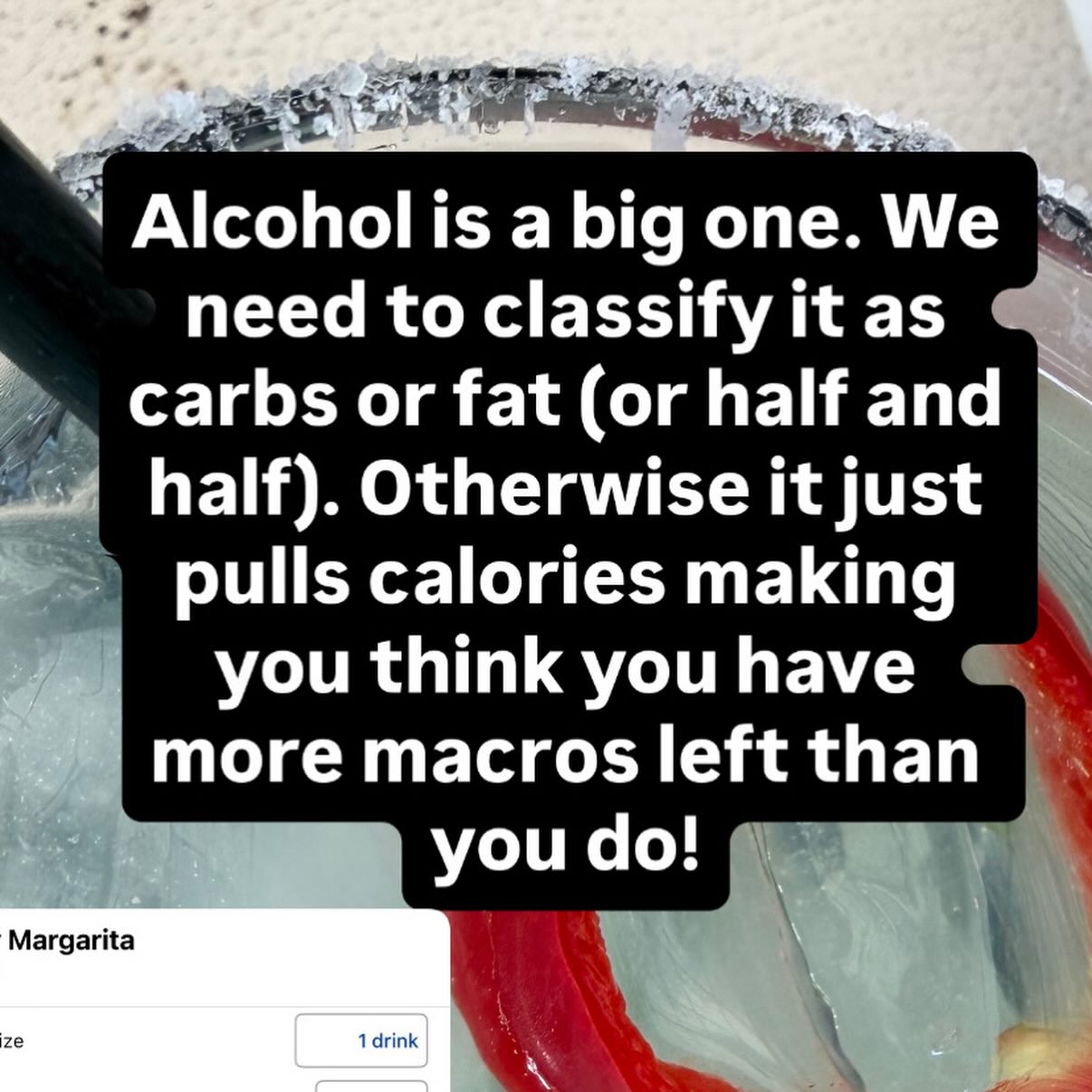
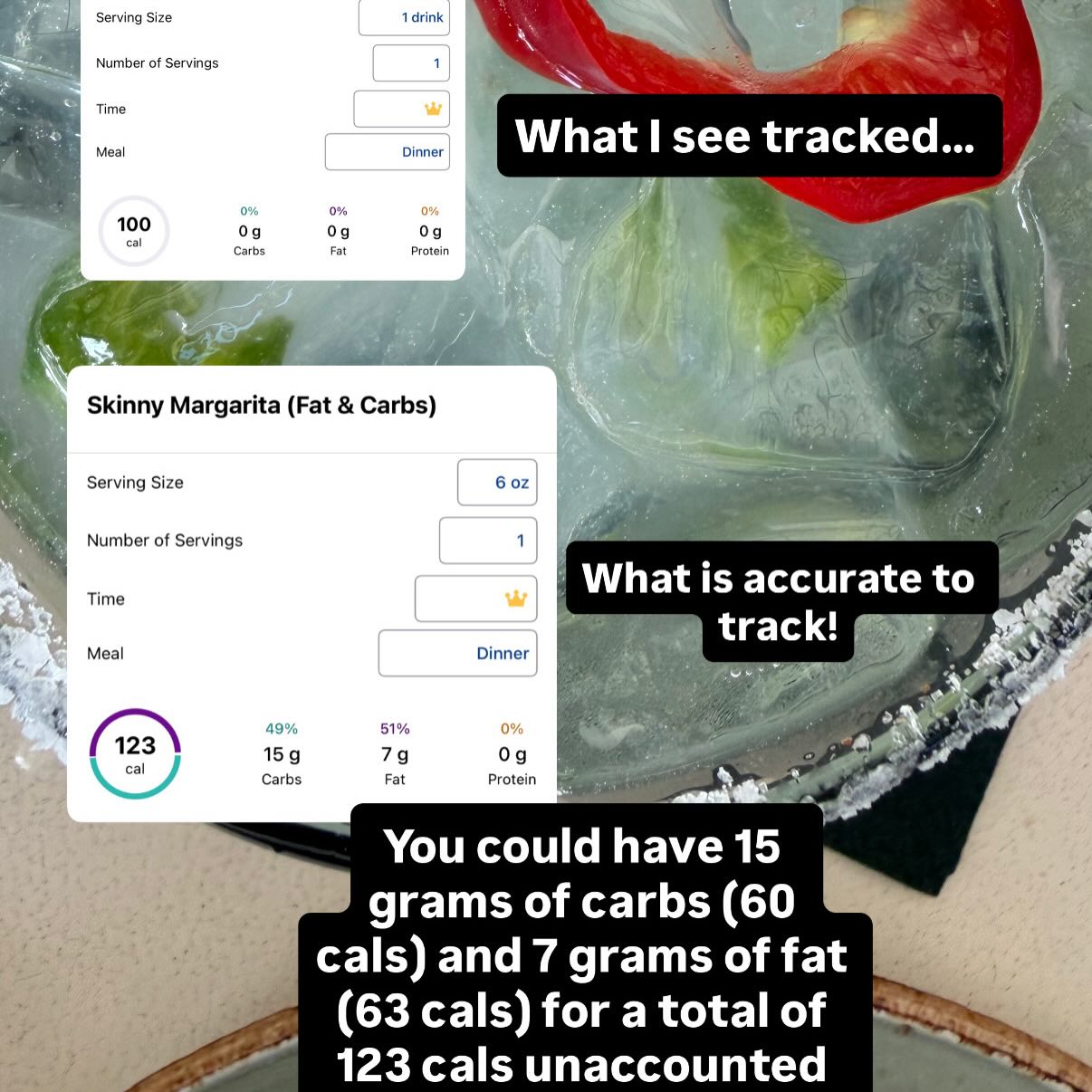
Alcohol is one of the biggest sources of tracking error, and not only because people forget the drink. It is how the drink gets logged. A margarita entered as 100 calories with zero carbs, zero fat, and zero protein tells your app you still have all your carb and fat macros left for the day. You do not.
Jennie's fix is to classify the drink's calories as carbohydrate or fat, or split them half and half. Logged accurately, that skinny margarita was closer to 123 calories, roughly 15 grams of carbohydrate and 7 grams of fat. Entered as calories only, those macros silently disappear from your daily math.
"Alcohol just pulls calories, making you think you have more macros left than you do."
Jennie Carolan, MS
A margarita logged as calories only with zero macros (100 cal) beside the same drink with carbs and fat accounted for (123 cal).
Mistake 5: The Little Bites
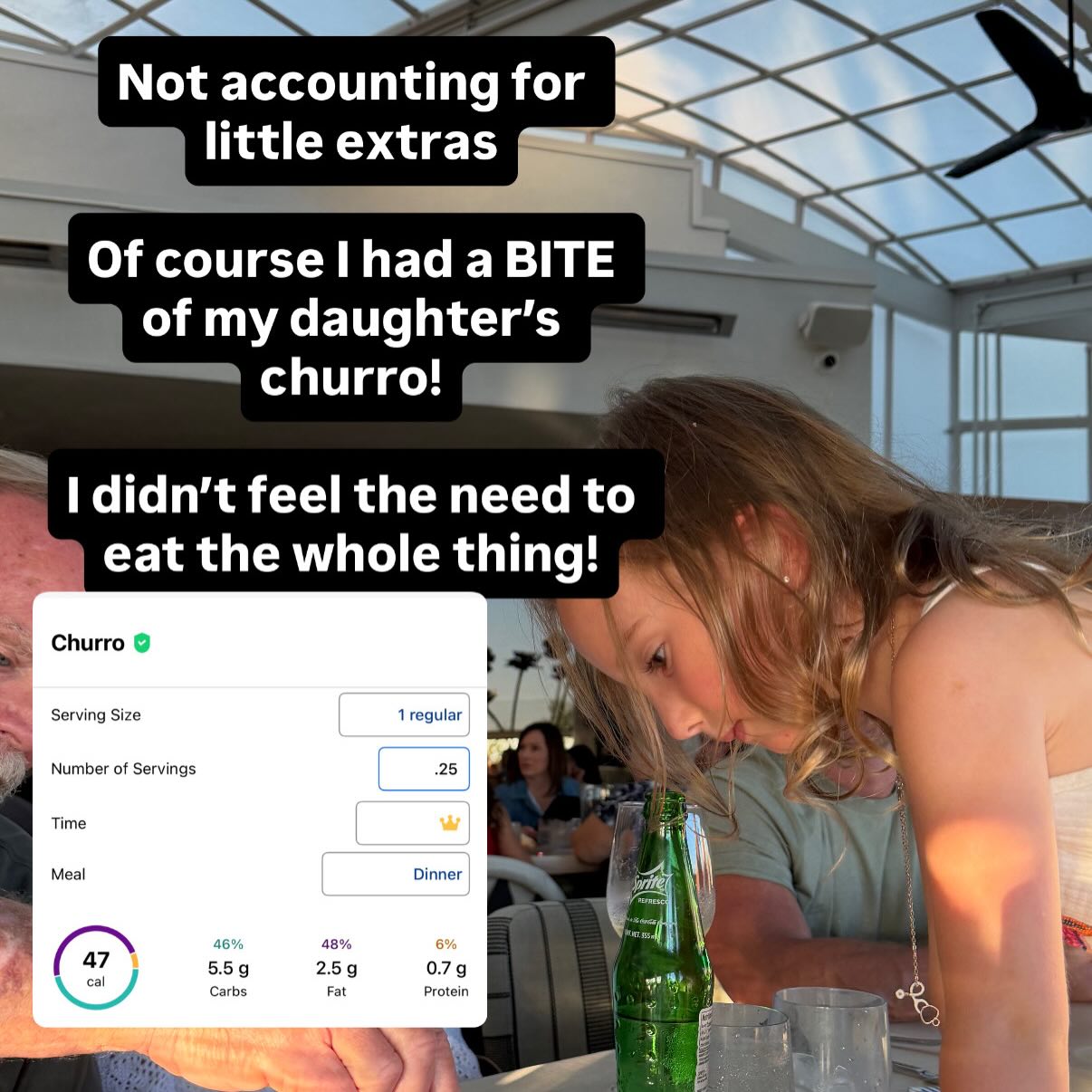
Then there are the bites that never officially happened. Of course Jennie had a bite of her daughter's churro. She did not eat the whole thing, so she logged a quarter serving, about 47 calories. Small on its own, and the kind of thing that, repeated across a week of family meals and shared plates, quietly adds up.
One bite of a shared churro, logged honestly at a quarter serving (47 cal).
The Tally: Almost 1,000 Calories
Put the accurate version next to the casual version and the difference is hard to ignore.
441 vs 1,335
The same restaurant dinner, logged casually versus logged accurately. A difference of almost 1,000 calories, from a single meal.
The meal totals side by side: what she could have logged (441 cal) versus what she actually logged (1,335 cal).
That gap is why someone can track diligently, eat out a few times a week, and still wonder why progress has stalled. The logging felt honest. It simply missed the oil, the portions, the extras, the beans, the drink, and the bite of churro.
Proactive Nutrition Beats Reactive Nutrition
Here is the encouraging part, and the point Jennie makes to her clients. The lesson from these numbers is simple: keep eating out, and go in with a plan.
She planned around this meal knowing it would be more indulgent. She logged it first and built the rest of her day around it, pulling back slightly on carbs and fats at other meals and prioritizing protein, fiber, and hydration all day. The indulgent dinner still fit, because the plan made room for it in advance.
Planning ahead is the whole difference. Jennie logged the indulgent meal first and built the rest of her day around it.
"You can eat out and hit your goals. But you have to go in with a plan. That is the difference between proactive and reactive nutrition."
Jennie Carolan, MS
Work With Our Nutritionist
If you eat out often and progress has stalled, accurate logging and a proactive plan are usually the fix. This is exactly what Jennie does with clients at APEX PWR, acting as a nutrition guide who helps you plan around real life in the Portland metro rather than react to it afterward.
Eat Out and Still Hit Your Goals
Start with a One-Time Macro Breakdown to get your targets dialed in, or go deeper with our coached nutrition program. Real food, real restaurants, a real plan.
How do I track calories accurately when eating out?
Assume more, not less. Restaurants cook with oil and butter, so choose database entries that include cooking fat, round portions up rather than down, and log every extra: chips, salsa, tortillas, sides, drinks, and bites off other plates. When in doubt, pick the higher-calorie version of an entry. Most people undercount, and a single restaurant meal can be hundreds of calories more than the lean version they logged.
Why am I not losing weight even though I track my food?
The most common reason is small, consistent under-logging, especially around eating out. Choosing entries without cooking oil, underestimating portions, skipping extras and sides, mis-logging alcohol, and ignoring little bites can hide hundreds of calories a day. In one real example from our nutritionist, the same restaurant dinner logged carefully versus casually differed by almost 1,000 calories.
How should I log alcohol when tracking macros?
Alcohol has calories but is often logged with zero carbs, fat, and protein, which makes your tracker think you have more macros left than you really do. A practical fix is to classify the drink's calories as carbohydrate or fat, or split it half and half, so the calories are accounted for against your daily targets.
Do I need to log a small bite of dessert or a few chips?
Yes, if you are tracking for a specific goal. Little extras add up. A few chips, a tortilla, some salsa, and a bite of a churro can quietly total 150 to 200 calories. Logging them, even at a quarter serving, keeps your day honest and is a habit our nutrition coaching builds with clients.
Can I eat out and still hit my nutrition goals?
Yes. The key is planning proactively rather than reacting after the fact. Log the indulgent meal first, build the rest of the day around it, pull back slightly on carbs and fats at other meals, and prioritize protein, fiber, and hydration. This is the proactive approach our nutritionist, Jennie Carolan, MS, coaches at APEX PWR in the Portland metro.
Go In With a Plan
Coached, proactive nutrition for people who eat real meals in the real world. Work with Jennie Carolan, MS, at APEX PWR in the Portland metro.
Example and figures from a food-logging breakdown by Jennie Carolan, MS, Nutrition Coach at APEX PWR, using her own logged restaurant meal. Calorie and macro values reflect the tracking-app entries shown in that breakdown and will vary by restaurant, recipe, and portion. This article is educational and is not individualized medical or nutrition advice.
Strength Training for Women and Bone Density: What Perimenopause Does to Your Skeleton | APEX PWR Tigard & Beaverton APEX PWR | Female Fitness Strength Training for Women and Bone Density: What Perimenopause Actually Does to Your Skeleton By The APEX Team | Tigard & Beaverton, Oregon | October 21, 2026 Key Takeaways Bone loss
Grip Strength, Force Plates, and the Numbers That Track How You Are Aging | APEX PWR Tigard & Beaverton APEX PWR | Lessons in Longevity Grip Strength, Force Plates, and the Numbers That Actually Track How You Are Aging By The APEX Team | Tigard & Beaverton, Oregon | October 21, 2026 Key Takeaways In
6 Nutrition Label Hacks That Take 10 Seconds and No App | APEX PWR Tigard & Beaverton APEX PWR | Nutrition Nook 6 Label Hacks That Take 10 Seconds and No App By Jennie Carolan, MS, Nutrition Director | Tigard & Beaverton, Oregon | October 14, 2026 Slides from the original post by Jennie Carolan,