How Consistent Strength Training Builds Confidence in Young Athletes | APEX PWR Portland
APEX PWR | Athlete Angle
How Consistent Strength Training Builds Confidence in Young Athletes
By The APEX Team | Tigard, Oregon | Serving Portland, Beaverton, Lake Oswego, Tualatin & the Westside Metro | June 2026
Key Takeaways
Confidence in young athletes does not come from pep talks. It comes from competence, and competence is built by repeatedly attempting and improving at hard things.
A structured strength program is a controlled place to try, fail, adjust, and improve, which builds the physical capability that confidence rests on.
The goal is incremental: roughly one percent better, more capable, and more resilient each session. Steady progress is the antidote to the burnout that comes from chasing a big result every weekend.
Consistent strength training develops a broad base of motor skills that helps offset the overuse injuries tied to early sport specialization.
Summer is the best window of the year to build that base. School is out, sport volume is down, and the body finally has the capacity to adapt.
Every parent in the Portland area knows how competitive youth sports have become. Year-round club teams, travel tournaments, and earlier and earlier specialization are the norm here. In that environment, the instinct is to add more: more games, more reps, more weekends on the road. The athletes who actually pull ahead, and stay healthy doing it, tend to be the ones who add something different instead: consistent, organized strength training.
That training does something most parents do not expect. Beyond making an athlete stronger and faster, it builds the one thing every parent wishes they could hand their kid directly: confidence.
You cannot talk a young athlete into confidence. Confidence is the byproduct of competence, and competence is earned the hard way: by attempting something you are not yet good at, making mistakes, and improving through repetition.
A structured strength program is close to the perfect environment for this. Trying a new lift or a new movement asks a kid to step outside their comfort zone and take a real crack at something they do not know how to do yet. Each repetition builds the neurological pathways that let the body solve physical problems. Over time the movement that felt impossible becomes routine. That is competence you can measure, and once the body is demonstrably more capable, confidence follows on its own. The fear of failure shrinks because the athlete has proof, earned in the gym, that they can get better at hard things.
Making the Weight Room Their Idea
Any parent of a teenager knows that telling them what to do is exhausting and usually backfires. Forced training drains everyone. The athletes who stick with it are the ones who feel ownership over it.
A coach or mentor can help create that ownership instead of imposing it. Rather than pointing out an athlete's flaws, a good coach asks the athlete what part of their game they think they could have done differently. When the athlete identifies their own weakness, the next question lands naturally: do you want to spend the next few weeks getting better at that in the gym? Now it is their goal, not a parent's demand.
This matters because all of us, kids included, gravitate toward what we are already good at and avoid what is hard. A coach provides the guidance and accountability to confront those neglected areas, which is exactly where the most growth is waiting.
One Percent Better, Every Session
Athletic development is a journey, not a single destination, and the most durable version of it is built on incremental wins. The goal of a given session is not a dramatic breakthrough. It is to be roughly one percent stronger, more skilled, and more resilient than last time.
That framing protects against a trap a lot of young athletes fall into: chasing a massive personal best or a standout performance every single weekend. That cycle is emotionally volatile and a fast track to burnout. Steady, measured progress in the weight room is the opposite. It is calm, repeatable, and it compounds. For more on balancing the demands of a competitive season against long-term development, see our piece on in-season versus off-season training.
The athlete chasing a highlight every weekend rides an emotional roller coaster. The athlete getting one percent better every session builds something that lasts.
Strength Training Helps Offset Overuse Injuries
The other quiet cost of the modern youth sports model is overuse injury. Kids who specialize early and play one sport year-round develop sport-specific skills but a narrow overall athletic base. Doing too much of the same movement too soon is one of the most common drivers of overuse injuries in young athletes.
Consistent strength training works against that. A well-designed program is a buffet of movement: jumping, landing, sprinting, pushing, pulling, bracing, and rotating. It develops the foundational motor skills and tissue capacity that a single sport never will on its own. The same way cross-training in something like gymnastics or grappling builds body awareness and control, a strength program builds the resilient building blocks an athlete carries into their primary sport.
We want to be honest here: no program eliminates injury, and some injuries are simply untimely. When one does happen, our team of sports physical therapists is here to get athletes back to competition, beyond simply out of pain. You can read how that works in this week's Physical Therapy Feature on returning throwing athletes to sport. But the better goal is to set athletes up to stay on the field in the first place, and a consistent strength base is one of the most evidence-supported ways to do that.
A Tool Most Parents Do Not Know About: Mental Reps
Strength and conditioning coaches do not only train the body. For an athlete who is injured or wrestling with performance anxiety, visualization is a genuine tool. Mentally rehearsing exact on-field movements, or picturing what a return-to-play process will look like, builds a form of muscle memory and helps calm the nervous system by making the mind familiar with the desired outcome before the body gets there. It is a small thing that pairs well with the physical work, and it is part of how a good coach develops the whole athlete.
Why Summer Is the Window
If there is a single best time to start, it is now. Summer is the most valuable training window of the year. School is out, in-season sport volume drops, and recovery capacity rises, which gives the body the room it needs to actually adapt to training. Athletes who use the summer well walk into their fall season stronger, more skilled, and more durable than the version of themselves that finished spring. For more on the speed side of that development, see our overview of speed training in Portland and why speed training matters for youth athletes. And if you missed it, last week we covered how to build the summer and protect the season.
From Consistent Work to the Top of the Podium
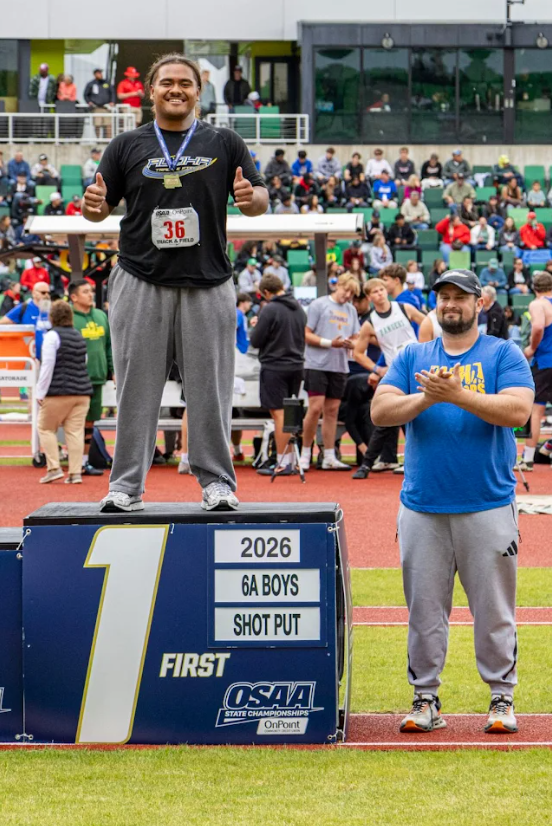
What does this look like when it comes together? It looks like an athlete who put in the consistent work and competed at the highest level their sport offers.
Aloha senior Scottland Telesa, 2026 OSAA 6A boys shot put state champion, with Aloha throws coach and APEX Director of Rehab Dr. Jon van den Boogaard, DPT, OCS, USATF Level 2.
That is the goal for every athlete we work with: the confidence, strength, and resilience to chase their championship goals, whatever those goals look like for them. It does not start with a single heroic effort. It starts with showing up and getting one percent better, consistently, over a summer and the seasons that follow.
Get Your Athlete Started This Summer
The best entry point is the Sports Science Assessment. We build a baseline so training is tailored to your athlete, then map the path forward.
Does strength training build confidence in young athletes?
Yes, indirectly but powerfully. Confidence grows out of competence, and competence comes from repeatedly attempting and improving at hard things. A structured strength program gives a young athlete a safe place to try new movements, make mistakes, and build physical capability. As the body becomes more capable, the athlete carries that proven competence onto the field, which tends to reduce performance anxiety and fear of failure.
Is summer a good time to start sports performance training?
Summer is one of the best windows of the year. School is out, in-season sport volume drops, and recovery capacity goes up, which gives the body room to actually adapt to training. Athletes who use the summer to build a strength base tend to enter the fall season stronger and more durable.
Can consistent strength training reduce overuse injuries in youth sports?
Consistent, well-programmed strength training is associated with reduced injury risk in young athletes, including overuse injuries. Early sport specialization and high repetitive volume in a single movement pattern raise overuse injury risk. Strength training develops a broad base of motor skills and tissue capacity that helps offset that, though no program eliminates injury entirely.
Where can my child start sports performance training near Portland?
APEX PWR offers youth sports performance and strength training in Tigard, Oregon, serving Portland, Beaverton, Lake Oswego, Tualatin, and the surrounding metro. The starting point is the Sports Science Assessment, which builds a baseline so training can be tailored to the individual athlete.
Build a Confident, Resilient Athlete
Consistent training, one percent better at a time. Start with a Sports Science Assessment or learn more about sports performance at APEX.
Photo from the 2026 OSAA/OnPoint Community Credit Union Track & Field State Championships, Hayward Field, Eugene, OR, May 29-30, 2026. This article is educational and reflects general training principles, not individualized medical or training advice.
Fitness Is the First Thing Most Dads Drop. Two Ways Back. | APEX PWR Tigard & Beaverton APEX PWR | Dad Duty Fitness Is the First Thing Most Dads Drop By Jeron Mastrud, Co-Founder | Tigard, Oregon | October 14, 2026 APEX Co-Founder Jeron Mastrud working out at APEX Key Takeaways When work and fatherhood
RSMI: The Muscle Number on Your DEXA Report, and When It Should Send You to a Bone Scan | APEX PWR Tigard & Beaverton APEX PWR | Female Fitness RSMI: The Muscle Number on Your Report, and When It Should Send You to a Bone Scan By The APEX Team | Tigard & Beaverton, Oregon
Visceral Fat Climbs With Age. Get the Number Before It Does. | APEX PWR Portland & Tigard APEX PWR | Lessons in Longevity Visceral Fat Climbs With Age. Get the Number Before It Does. By The APEX Team | Tigard, Oregon | October 14, 2026 Key Takeaways Visceral fat sits around your organs. It is