6 Nutrition Label Hacks That Take 10 Seconds and No App | APEX PWR Tigard & Beaverton
APEX PWR | Nutrition Nook
6 Label Hacks That Take 10 Seconds and No App
By Jennie Carolan, MS, Nutrition Director | Tigard & Beaverton, Oregon | October 14, 2026
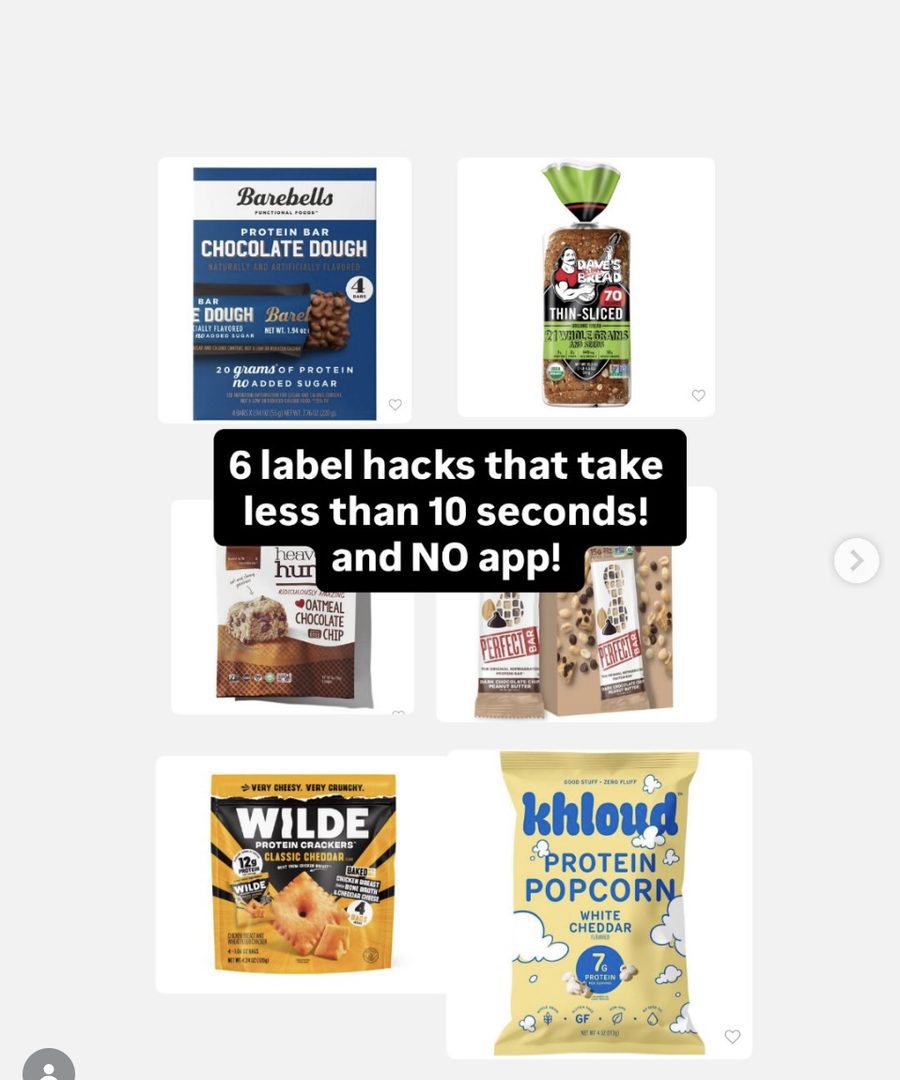
Slides from the original post by Jennie Carolan, MS (@nutritionbyjennie) in collaboration with APEX PWR (@apexpwr). Products shown are examples of labels discussed in the post.
Key Takeaways
Servings per container first. Every other number on the panel is per serving, so check it before you read anything else.
Protein: add a zero to the protein grams and compare it to the calories. 20 grams becomes 200. At or under 200 calories, it is a real protein source.
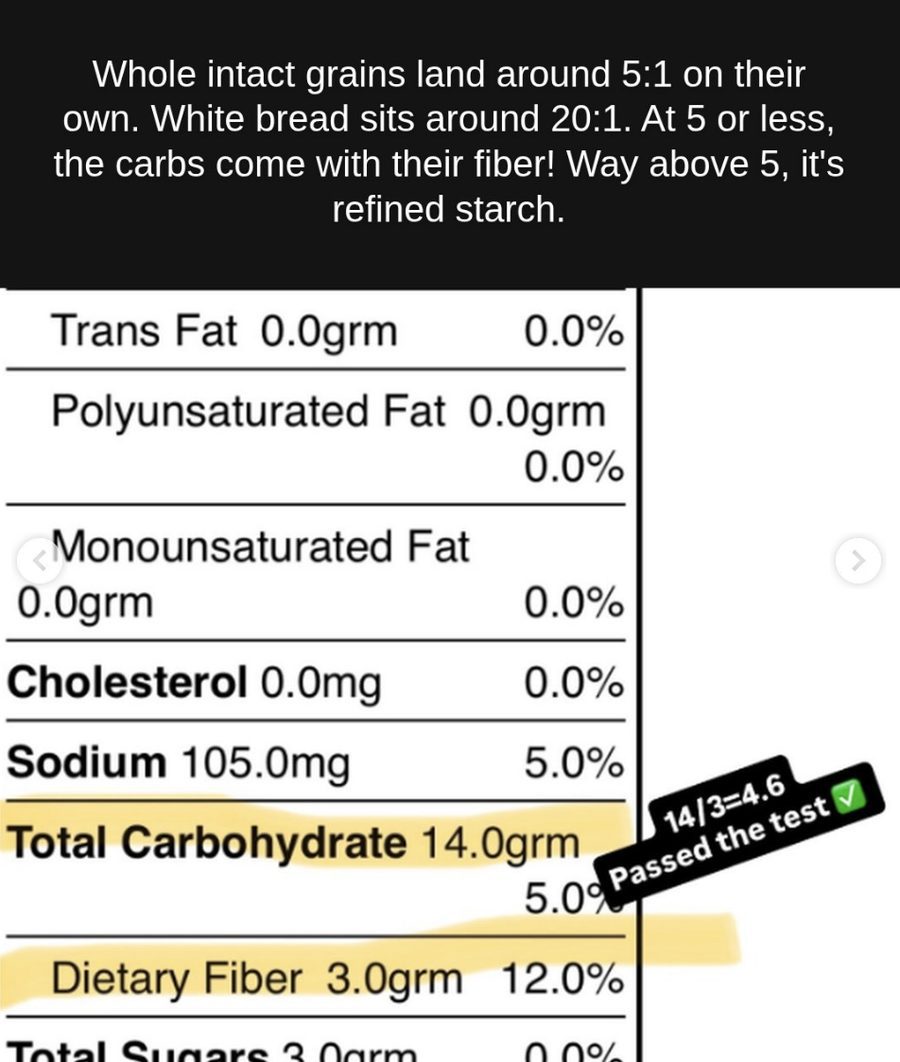
Fiber: divide total carbohydrate by fiber. You want 5 or less. Whole intact grains land near 5 to 1. White bread sits near 20 to 1.
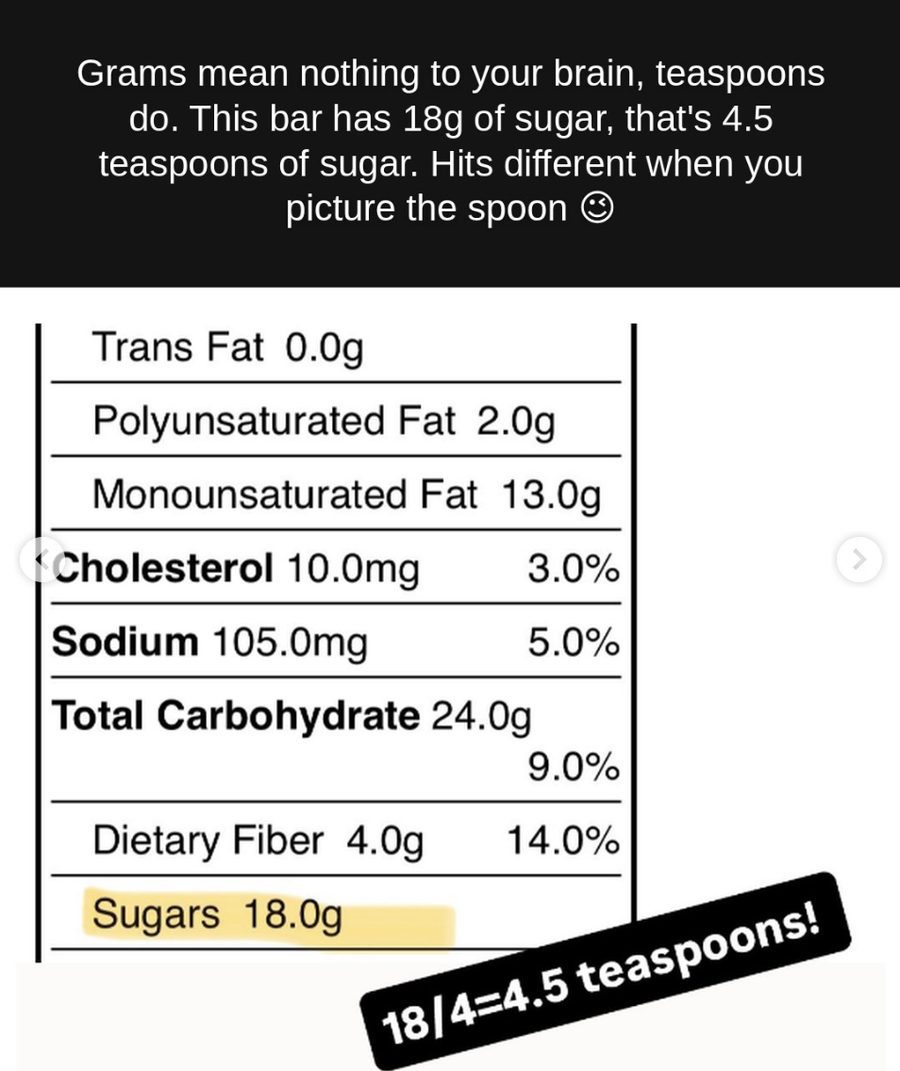
Sugar: divide the grams by 4 to get teaspoons. 18 grams is four and a half teaspoons, which lands differently than "18g."
Ingredients: read the first three. They are listed by weight, so the top three are most of what is in the bag.
Sodium: on snacks and frozen meals, milligrams of sodium should be at or under the calorie count.
None of this needs an app, and all six together take about ten seconds while you are holding the box.
Our Nutrition Director, Jennie Carolan, MS, posted these six checks to Instagram this week as a collaboration with APEX, and the response was immediate enough that we wanted them somewhere permanent. Here they are in full, with the reasoning behind each one.
The premise is simple. You are standing in an aisle at Fred Meyer or New Seasons with a box in your hand and about ten seconds of patience. You are not going to pull out an app, log the item and wait for a database match. You need a decision now.
These are six pieces of arithmetic you can do in your head while holding the package. Jennie has used them for years. None of them require you to memorize anything.
Expert Contributor
Jennie Carolan, MS is the Nutrition Director at APEX PWR with more than a decade in the field. She runs the 12 Week Nutrition Challenge and the One-Time Macro Breakdown, both delivered remotely, and she is a mother of two who builds plans around real households rather than ideal ones.
Watch the Original Post
The full carousel is embedded below. Each hack has a rule slide and a worked example on a real label, so if you learn better by seeing the highlighted number, swipe through it first and come back.
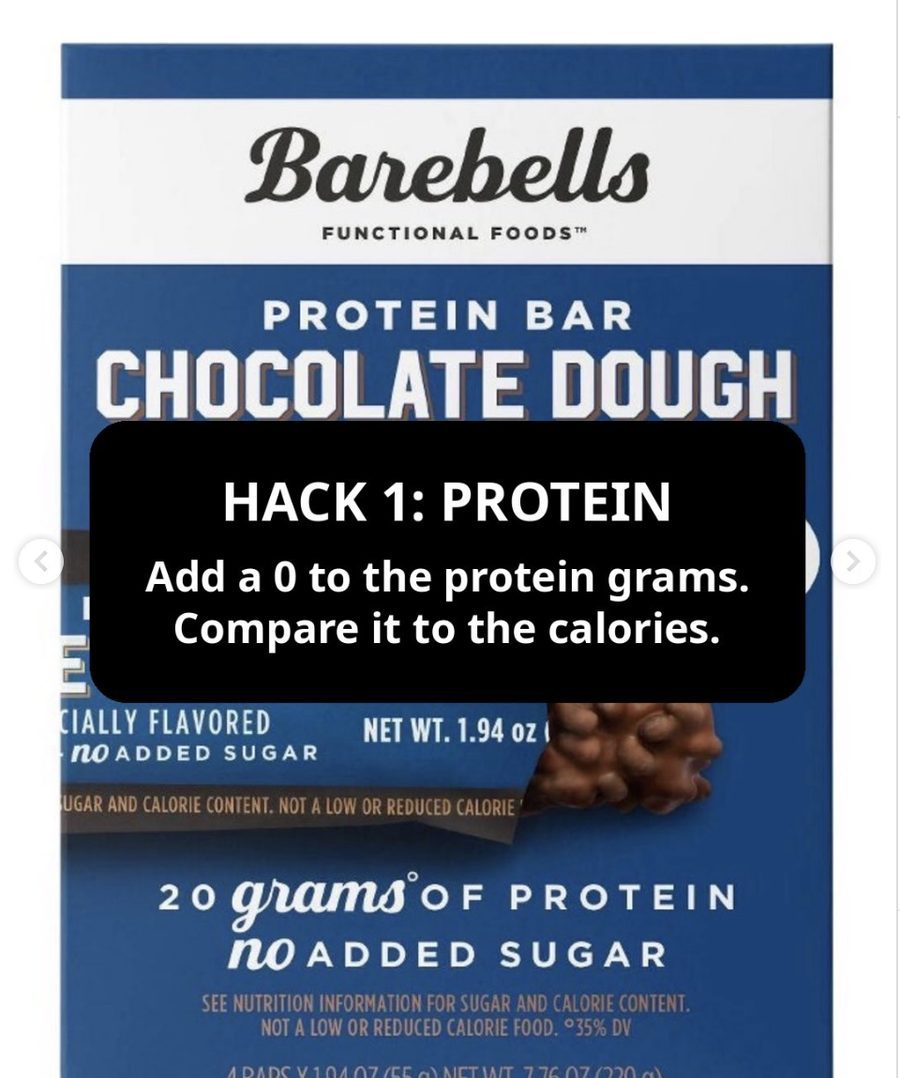
Add a zero to the protein grams. Compare it to the calories.
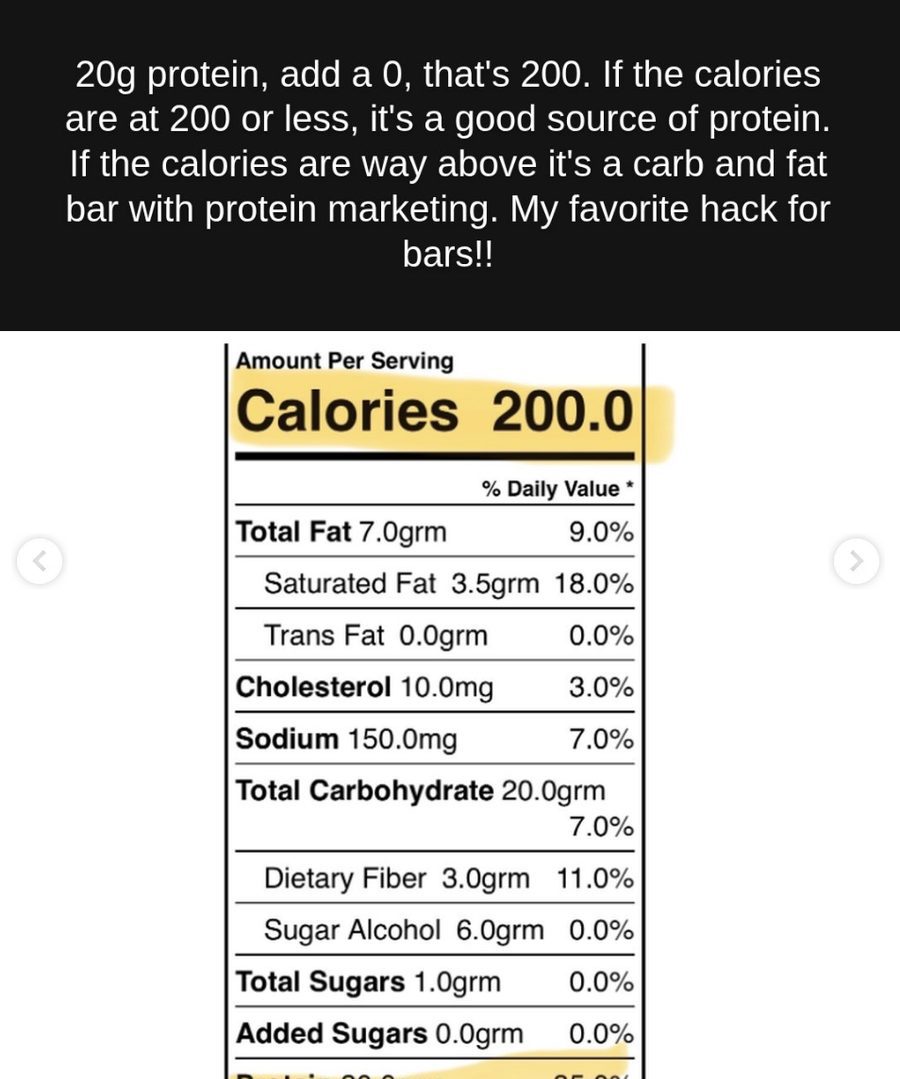
20 grams of protein becomes 200. If the calories are at 200 or less, it is a good source of protein. If the calories run well above it, you are holding a carbohydrate and fat product with protein marketing on the front.
The rule. A bar front advertising 20 grams of protein.The worked example. 20 grams becomes 200, and the panel reads 200 calories. It clears.
This is Jennie's favorite check for bars, and it is the one that saves people the most money.
Run it on a bar advertising 20 grams of protein. Twenty becomes 200. If that bar is 190 calories, almost everything in it is doing the job you bought it for. If it is 310 calories, then roughly 110 calories past the protein are coming from somewhere else, and that somewhere else is sugar, syrup, palm oil or all three.
The same check works on yogurt, shakes, frozen entrees and the entire aisle of products that put a protein number on the front panel. It is not a perfect nutritional assessment and it does not need to be. It is a filter, and it removes most of the shelf in about two seconds.
Hack 2: Fiber
The Rule
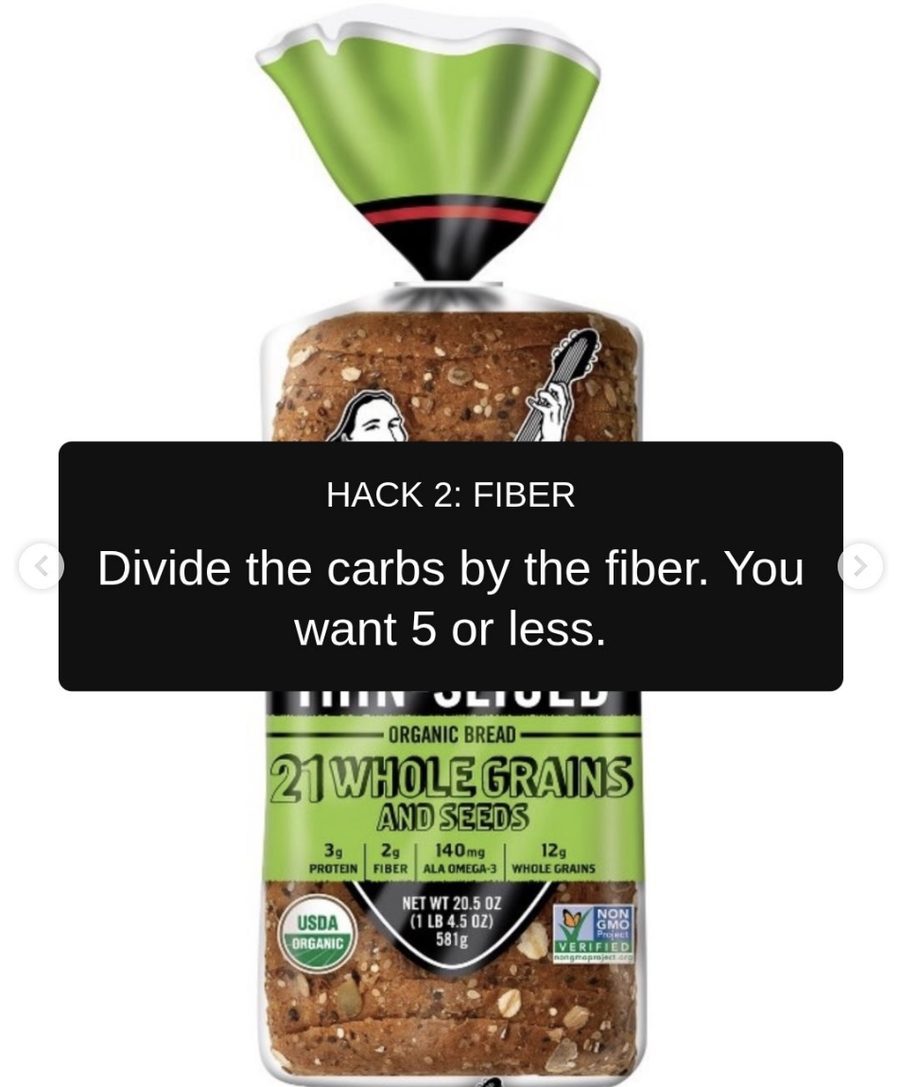
Divide the carbs by the fiber. You want 5 or less.
Whole intact grains land around 5 to 1 on their own. White bread sits around 20 to 1. At 5 or less, the carbohydrate comes with its fiber. Way above 5, it is refined starch.
The rule. Total carbohydrate divided by dietary fiber.14 divided by 3 is 4.6. Under 5, so the carbohydrate came with its fiber.
The reasoning here is structural. In a grain that has not been stripped, the fiber and the starch arrive together, and that ratio tends to fall out around 5 to 1 without anyone engineering it. Milling removes the bran, the fiber goes with it, and the ratio climbs.
So the number is a proxy for how much processing happened between the field and the bag. A bread with 14 grams of carbohydrate and 3 grams of fiber comes out at 4.6, which clears. A bread at 20 to 1 is telling you the carbohydrate has been separated from the thing that slows it down.
You do not have to know anything about glycemic index, net carbs or any other framework to run this. Two numbers, one division, done.
Hack 3: Sugar
The Rule
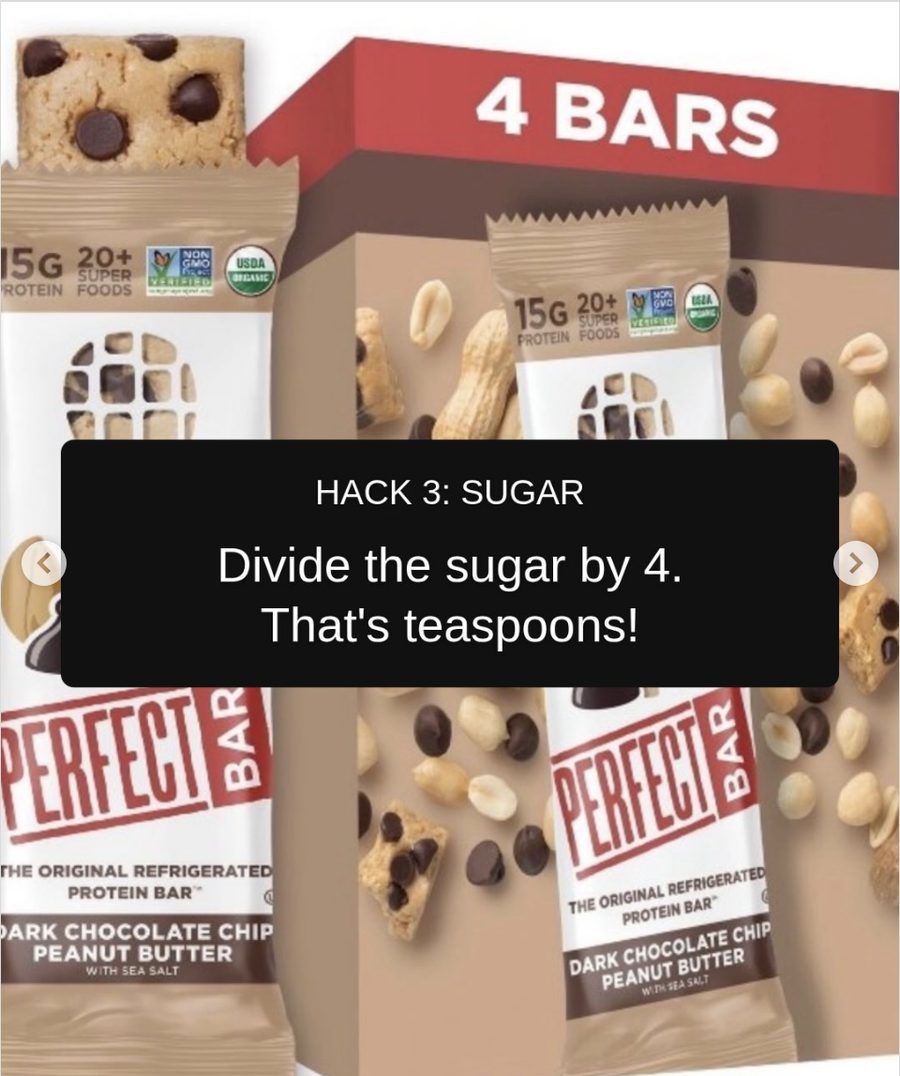
Divide the sugar by 4. That is teaspoons.
Grams mean nothing to your brain. Teaspoons do. A bar with 18 grams of sugar is four and a half teaspoons of sugar. It hits differently when you picture the spoon.
The rule. Sugar grams divided by 4 gives teaspoons.18 grams of sugar is four and a half teaspoons. Easier to picture.
This one is pure psychology and that is exactly why it works.
Nobody has an intuition for 18 grams. It is a unit that appears on packaging and nowhere else in your life. Four and a half teaspoons is something you can see, because you have spooned sugar into coffee and you know roughly what that pile looks like.
The conversion does not change the food. It changes whether you can actually weigh the food against how much you want it, which is the only decision you are making in the aisle anyway.
Hack 4: Ingredients
The Rule
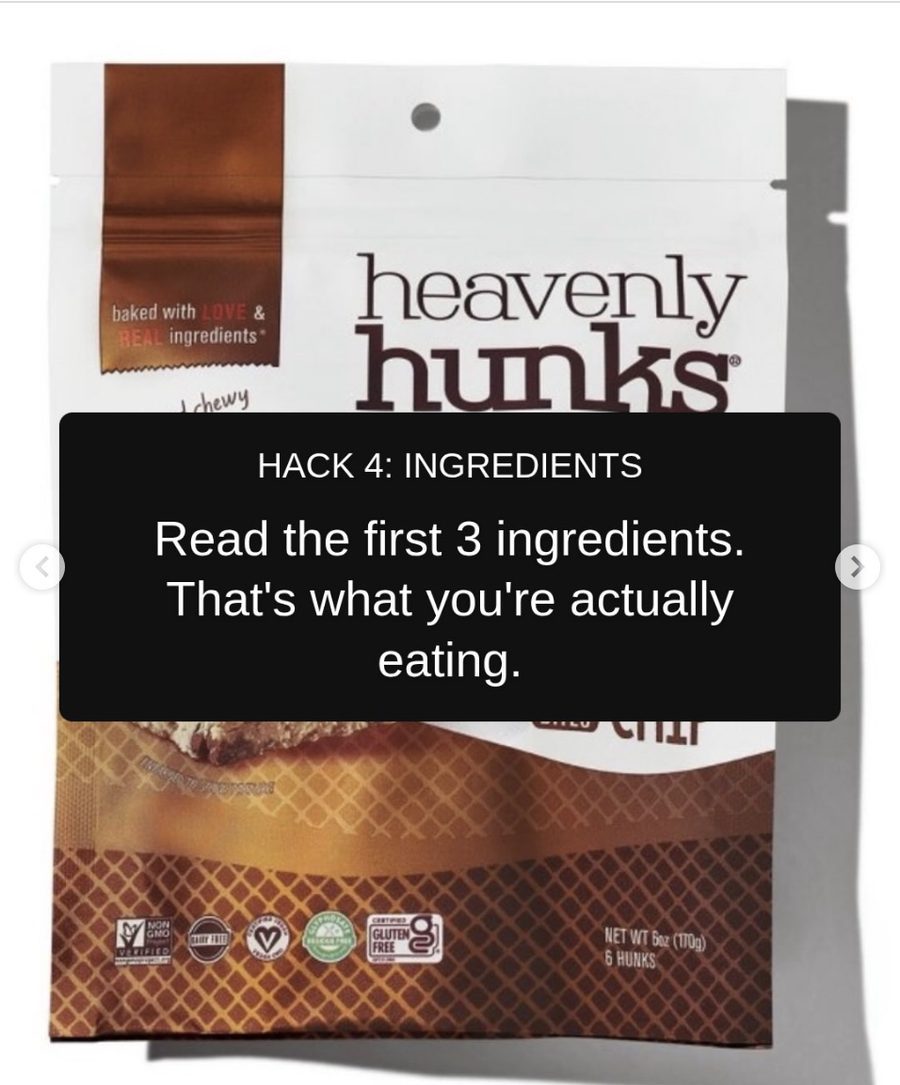
Read the first 3 ingredients. That is what you are actually eating.
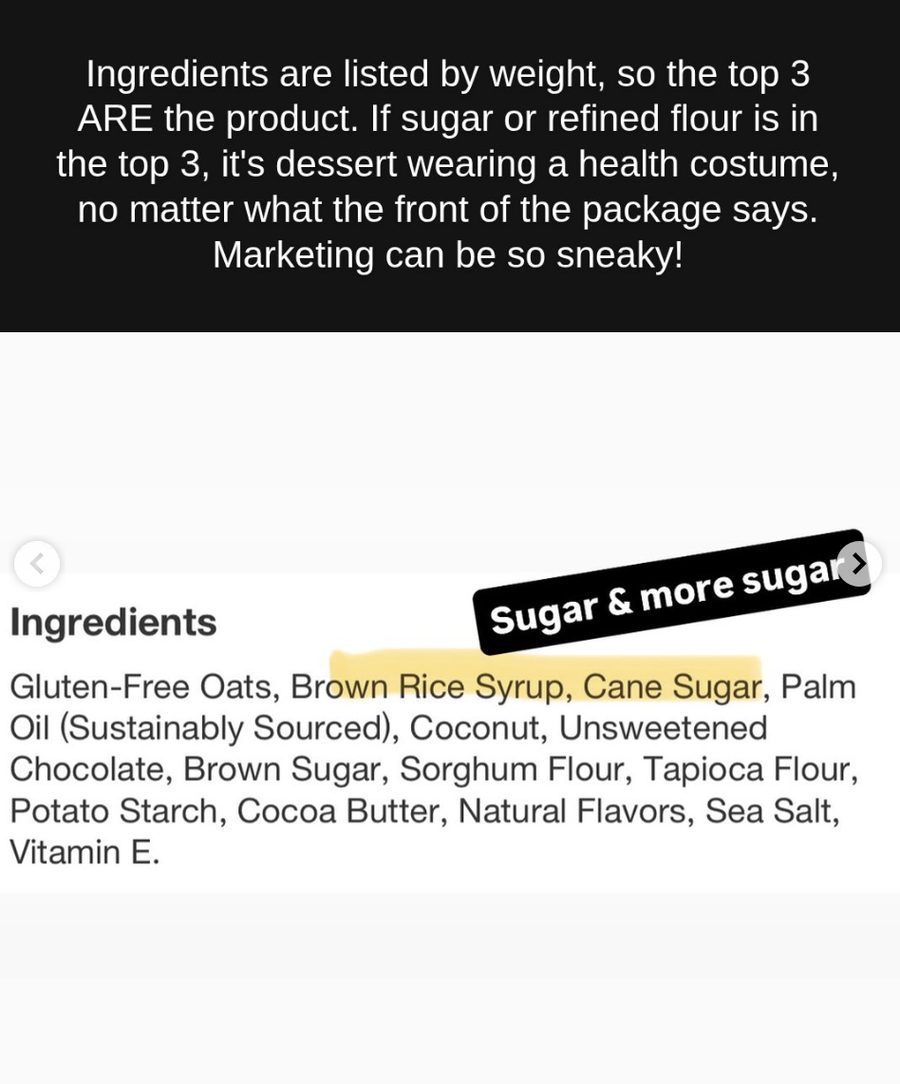
Ingredients are listed by weight, so the top 3 are the product. If sugar or refined flour is in the top 3, it is dessert wearing a health costume, no matter what the front of the package says. Marketing can be sneaky.
The rule. Ingredients are listed by weight, so the top three are the product.Oats, then brown rice syrup, then cane sugar. Two of the top three are sugar.
Ingredient lists are ordered by weight, and that ordering is the most honest thing on the package, because it is a legal requirement rather than a marketing choice.
So when a snack with "real ingredients" and "baked with love" on the front lists oats, then brown rice syrup, then cane sugar, the back of the package has quietly told you that two of the three largest things in the bag are sugar in different outfits. The front panel said nothing false. It just talked about something else.
Watch for sugar appearing under several names across the list, which splits the weight and pushes each individual entry lower. Brown rice syrup, cane sugar, cane juice, tapioca syrup, honey and molasses are all sugar for this purpose.
Hack 5: Sodium
The Rule
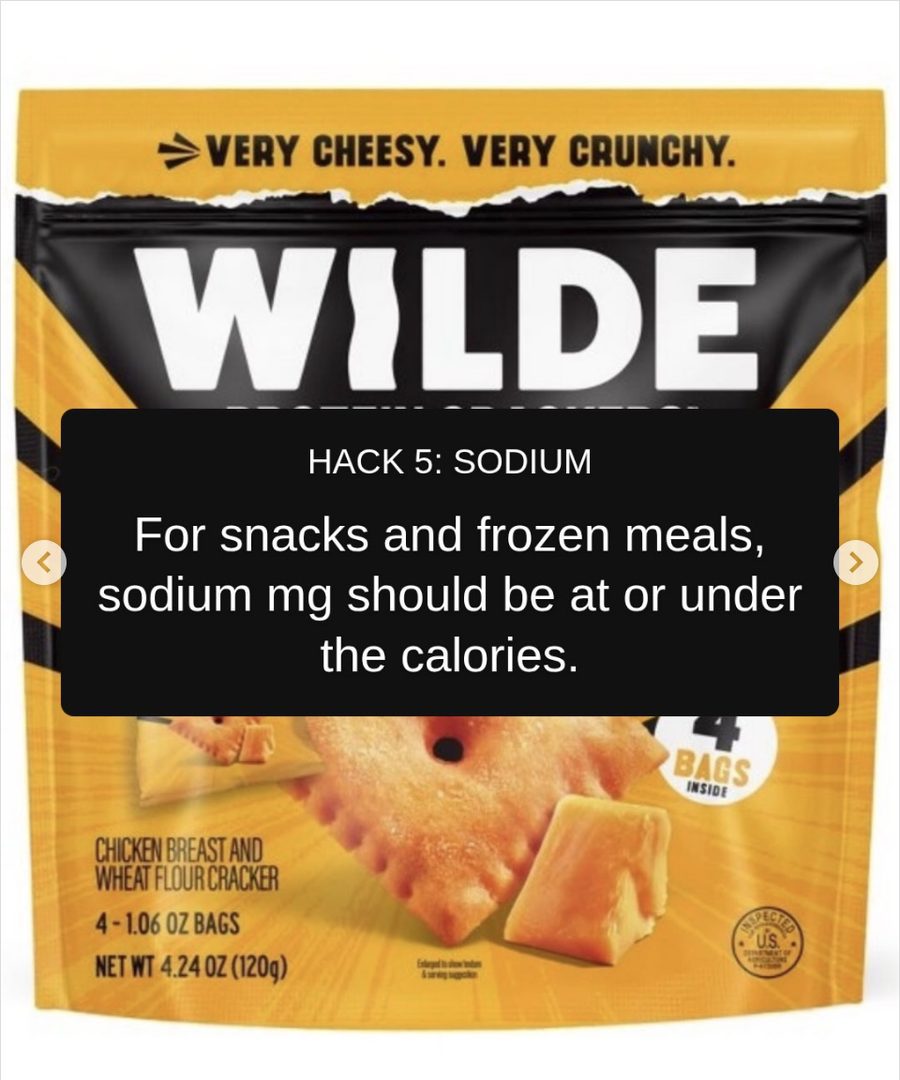
For snacks and frozen meals, sodium mg should be at or under the calories.
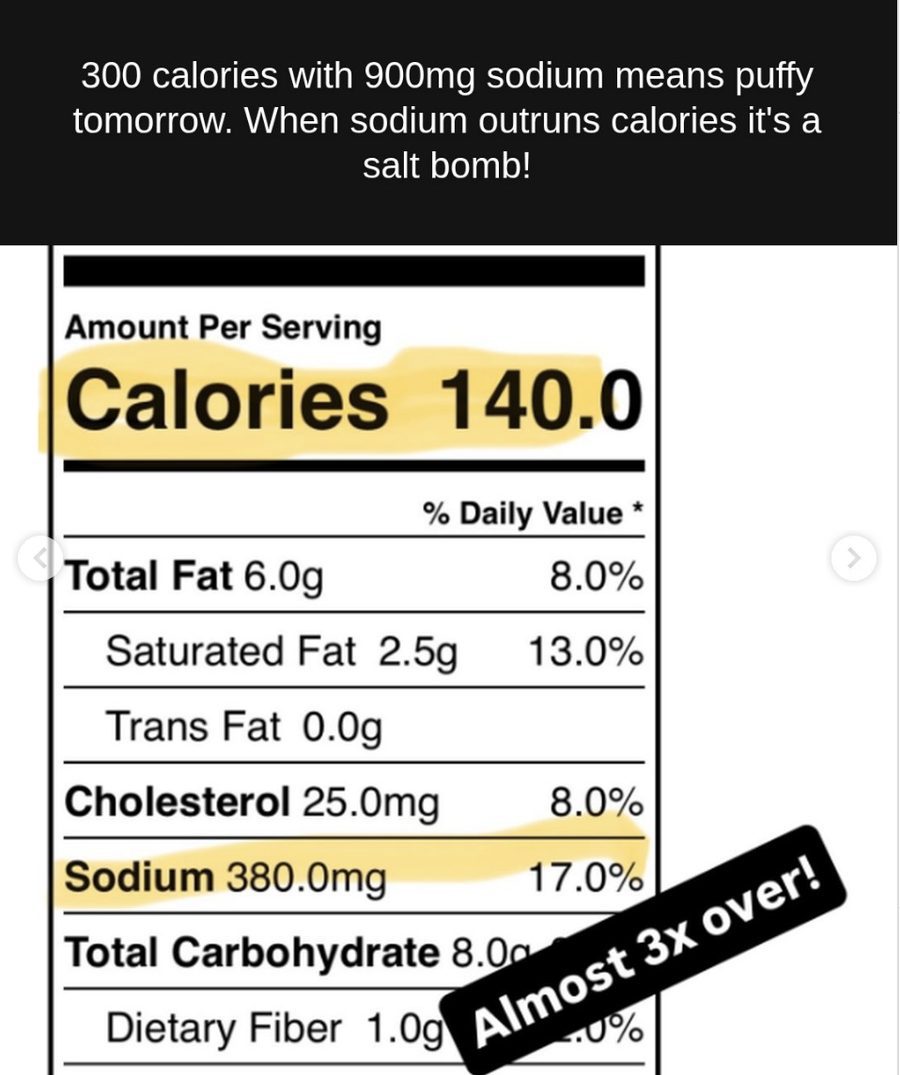
300 calories with 900 milligrams of sodium means puffy tomorrow. When sodium outruns calories, it is a salt bomb.
The rule. Applies to snacks and frozen meals, not to seasonings.140 calories against 380 milligrams of sodium. Almost three times the ratio.
This one has a narrower scope than the others, and Jennie is specific about it: snacks and frozen meals. It is not meant for soup, soy sauce or anything you are obviously using as a seasoning.
Inside that scope it works well. A cracker at 140 calories carrying 380 milligrams of sodium is running close to three times the ratio. Nobody needs to panic about that. It does explain the scale reading the next morning and the rings being tight, and it matters more if your doctor has talked to you about blood pressure.
If you want the practical version: sodium is the most common reason a weekday weigh-in looks wrong after a convenient dinner. That is water, it resolves in a day or two, and knowing the cause keeps you from making a bad decision about your plan based on a number that was never about fat.
Hack 6: Servings
The Rule
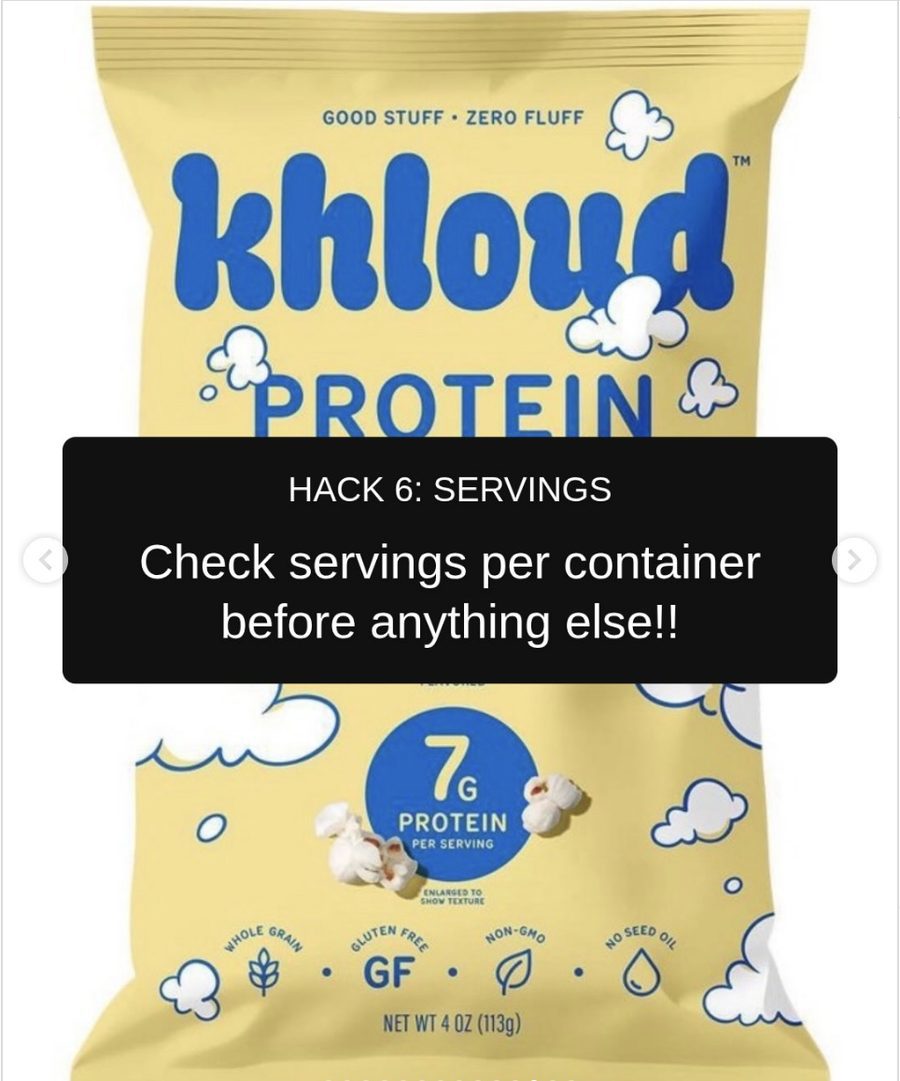
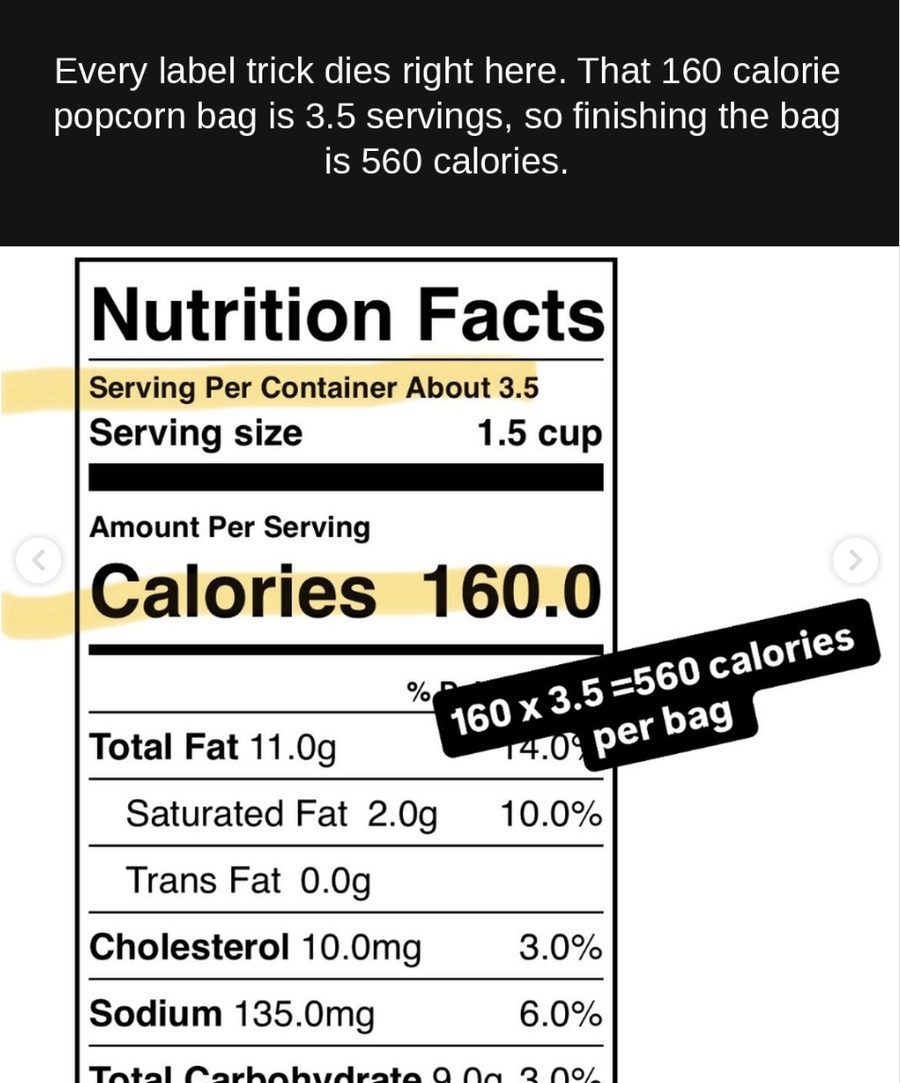
Check servings per container before anything else.
Every label trick dies right here. That 160 calorie popcorn bag is 3.5 servings, so finishing the bag is 560 calories.
The rule, and the one to run first.160 calories per serving, 3.5 servings per bag. The bag is 560 calories.
Jennie lists this one sixth and calls it the thing to check first. Both make sense: it is the check that turns every per serving number into what you will actually eat.
A single serve bag of protein popcorn that lists 160 calories is a 560 calorie bag at 3.5 servings per container. The panel did not lie. It answered a question about a portion nobody eats.
It is worth knowing what this check does not change. Protein against calories, carbs against fiber and sodium against calories are ratios, so they give the same verdict per serving or per bag. Multiply both sides by 3.5 and the comparison holds. What changes is the totals: calories, teaspoons of sugar and milligrams of sodium all go up 3.5 times when you finish the bag, and those are the numbers that add up over a day.
The Whole Thing in One Sentence
Servings first, then protein, fiber, sugar, ingredients and sodium. Six checks, ten seconds, no app.
The Quick Reference
Check
The math
What clears
Servings
Read servings per container
Multiply everything else by it before judging
Protein
Protein grams × 10, compare to calories
Calories at or under that number
Fiber
Total carbohydrate ÷ dietary fiber
5 or less
Sugar
Sugar grams ÷ 4
Teaspoons you are willing to eat
Ingredients
Read the first 3
No sugar or refined flour in the top 3
Sodium
Sodium mg vs calories (snacks, frozen meals)
Sodium at or under calories
A Fair Caveat
These are heuristics, and heuristics trade precision for speed on purpose. A few good foods will fail one of them, and a few engineered products will pass all six. Plain Greek yogurt fails the fiber rule because it has no fiber at all, even though its few grams of carbohydrate are mostly the natural sugar in milk. Beans fail the sodium rule in a can. A high fiber tortilla can pass the carb to fiber test on isolated fiber rather than intact grain.
That is fine. The purpose is to filter the aisle fast, not to adjudicate every package. If a food you trust fails one check for a reason you understand, buy it anyway. Knowing why you are overriding a rule is a sign the rule is doing its job.
Where This Fits in the Bigger Picture
Label literacy is the floor, not the ceiling. It keeps bad choices out of the cart, and that is worth a lot on a Tuesday when you are tired. What it will not tell you is how much you personally should be eating, which is a different question and the one most people actually need answered.
That is what the One-Time Macro Breakdown is for. Jennie builds your numbers off a questionnaire and, when you have one, your DEXA body composition results, and it comes with shopping lists, lean protein options and a sample week. It is the lowest cost way to get accurate information from an actual nutrition professional rather than a calculator.
If the harder part for you is doing it consistently rather than knowing what to do, the 12 Week Nutrition Challenge adds weekly education and ongoing support, and it runs remotely. Both are built for people with jobs and kids, which is most of who we work with.
One more place the aisle matters: supplements are held to a different and looser standard than food, and the same front-of-package problem applies with less oversight behind it. We use Thorne for that reason, and our clients get lifetime 25% off pharmaceutical-grade products through our dispensary.
Get Your Actual Numbers
Six rules will clean up your cart. Your own targets will change what happens over the next twelve weeks. Nutrition coaching with Jennie Carolan, MS is delivered remotely, so you can start from anywhere. Testing and training happen in Tigard, Oregon, minutes from Beaverton off Highway 217.
How do I tell if a protein bar is actually a protein bar?
Add a zero to the protein grams and compare it to the calories. A bar with 20 grams of protein becomes 200. At or under 200 calories, protein is carrying its weight. At 280 or 320 calories, the extra is coming from carbohydrate and fat, and you are buying a candy bar with a protein claim on the wrapper. The same check works on yogurts, shakes and frozen entrees.
What is a good carb to fiber ratio on bread?
Divide total carbohydrate by dietary fiber and look for 5 or less. Whole intact grains land near 5 to 1 without help, because the fiber is still attached to the starch it came with. White bread sits closer to 20 to 1, because milling removed the fiber. A ratio well above 5 tells you the carbohydrate has been stripped of the thing that slows it down.
How much sugar is in 18 grams?
About four and a half teaspoons. Divide sugar grams by 4. Grams do not mean much to most people and teaspoons do, because you can picture the pile. The conversion turns an abstract number into something you can weigh against how much you want the food.
Why does serving size matter so much?
Because the calories, sugar and sodium on the panel are all per serving, and the serving is often set smaller than how people actually eat the product. A bag listing 160 calories per serving at 3.5 servings per container is 560 calories if you finish it. The protein, fiber and sodium ratio checks give the same verdict either way, but the totals do not, so check servings first.
Do I need a macro tracking app to eat well?
No, and that is the point of these six checks. Apps are useful for a defined stretch when you want precision about your intake, and they do nothing for you at the moment of decision in the aisle. These rules are arithmetic you can run holding the box. If you want your own numbers rather than general rules, that is what a macro breakdown is for.
Do you offer nutrition coaching in Tigard and Beaverton?
Yes. We are at 11105 SW Greenburg Rd in Tigard, Oregon, just off Highway 217, serving Tigard, Beaverton, Portland, Lake Oswego, Tualatin, King City and Sherwood. Nutrition coaching with Jennie Carolan, MS is delivered remotely, so you can work with her from anywhere, and it pairs with in person testing and training at the Tigard facility.
This article is educational and is not medical or dietary advice for any individual, a diagnosis, or a substitute for care from your own physician or registered dietitian. The checks described here are rules of thumb for comparing packaged foods quickly and they do not account for individual medical conditions, allergies, medications or prescribed dietary restrictions. If you have been given sodium, carbohydrate, protein or any other dietary limits by a clinician, those limits come first. Product names appear only as examples of labels discussed in the original Instagram post and are not endorsements or criticisms of those companies.
Source. The six checks and their framing come from an Instagram collaboration post by Jennie Carolan, MS (@nutritionbyjennie) with APEX PWR (@apexpwr), published 12 October 2026, fourteen slides. Ingredient ordering by predominance of weight and the required Nutrition Facts panel elements, including servings per container, serving size, sodium and dietary fiber, are specified under US Food and Drug Administration food labeling regulations, 21 CFR 101. The 4 grams per teaspoon sugar conversion is the standard approximation used in consumer nutrition education.
Visceral Fat Climbs With Age. Get the Number Before It Does. | APEX PWR Portland & Tigard APEX PWR | Lessons in Longevity Visceral Fat Climbs With Age. Get the Number Before It Does. By The APEX Team | Tigard, Oregon | October 14, 2026 Key Takeaways Visceral fat sits around your organs. It is
Your Scale Is a Bad Instrument for Perimenopause. Here Is What to Measure Instead. | APEX PWR Tigard & Beaverton APEX PWR | Female Fitness Your Scale Is a Bad Instrument for Perimenopause By The APEX Team | Tigard & Beaverton, Oregon | September 23, 2026 Key Takeaways Research following women across the menopause transition
MCL vs ACL: Why the First Read on a Knee Injury Is So Often Wrong | APEX PWR Physical Therapy, Tigard Oregon APEX PWR | Physical Therapy Feature MCL or ACL? Why the First Read on a Knee Is So Often Wrong. By Jeron Mastrud | Former NFL Tight End | Founder, APEX PWR |