The Hidden Skill That Keeps You From Falling as You Age
Inspired by Dr. Peter Attia’s The Drive Podcast #342
Why do people over the age of 65 fall more often? And why are women especially at risk? According to Dr. Peter Attia, one of the most important yet least discussed factors behind falls is the gradual loss of reactivity.
What Is Reactivity, and Why Does It Matter?
Reactivity is your body’s ability to respond quickly and effectively to unexpected movement, like catching yourself from tripping or adjusting your balance mid-step. It’s something most people take for granted until it’s gone.
Dr. Attia explains, “As we age, we don’t just lose our balance. We’re losing something else that people my age and certainly her age take for granted, which is called reactivity.”
He goes on to describe how this decline is connected to a specific type of muscle fiber:
“The type of muscle fiber that was necessary to do that, which if we want to get technical is called a Type 2A muscle fiber, is the type of muscle fiber that is responsible for explosive movement. Those muscle fibers start getting weaker and shrinking at about the age of 25. By the time someone’s your age, you’ve got threads of those things left.”
This loss of reactivity is one of the main reasons falls become so dangerous later in life. But here’s the good news: as Dr. Attia emphasizes, “You can train these muscle fibers, but the only way to train them is to move very heavy weights.”
Strength Training Is Fall Prevention
Reactivity and stability aren’t just about balance exercises. They’re built through strength and power training. Heavy, controlled lifting is one of the only ways to stimulate those fast-twitch muscle fibers and preserve the ability to move quickly when needed.
This is especially critical for women, who on average have less muscle mass and lower bone density than men. Without regular strength and impact training, the risk of falls, fractures, and loss of independence rises significantly.
Dr. Attia highlights research by Dr. Belinda Beck and the LIFTMORE Study, which showed that older adults, including postmenopausal women, can actually increase bone density through targeted resistance training. “Lifting weights is something every person on this planet should be doing,” he says.
How to Measure and Maintain Reactivity
At APEX Performance Wellness & Rehab, we help clients assess and improve their physical resilience through data-driven testing and training. We offer a variety of Wellness Testing which provides insight into body composition, bone density, and cardiorespiratory fitness, and muscle balance. These metrics guide a personalized approach to longevity and performance.
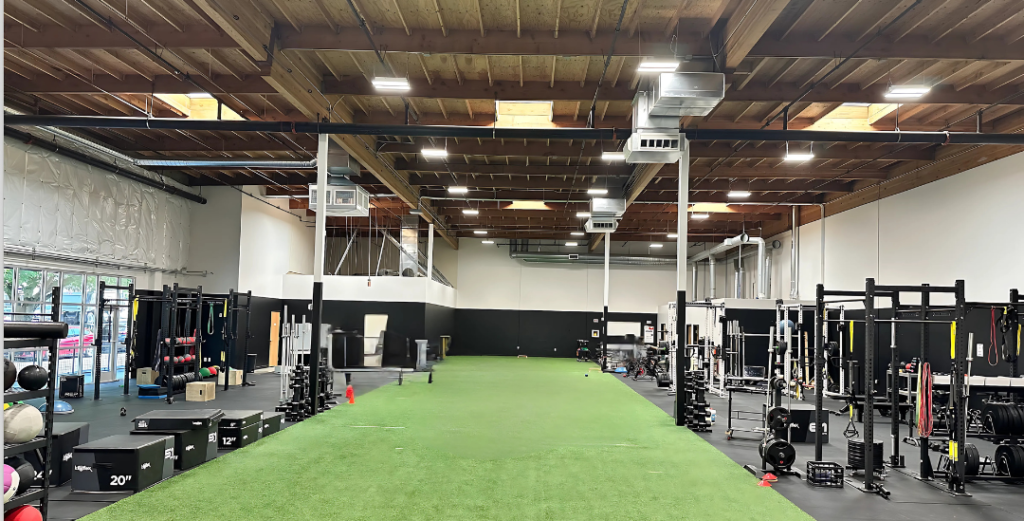
We also provide one-on-one physical therapy, personal training and group training options to build strength and reactivity inside our 10,000 square foot training facility in Portland, Oregon.


Start Building Reactivity Today
Whether you’re an athlete, a professional, or someone looking to age actively, maintaining reactivity is one of the best investments you can make in your long-term health. It’s never too late to start.
📍 Learn more about training, recovery, and testing programs at APEX PWR.
Because longevity isn’t just about living longer; it’s about staying strong, steady, and ready for life’s unexpected moments.
Previous Blogs
Thorne Advanced Pre-Workout | Tigard Performance Fuel
Introducing Thorne Advanced Pre-Workout: Elevated Performance, Bold New Flavor Introducing Thorne Advanced Pre-Workout: an evolution of Pre-Workout Elite. Delivering the same performance boost, now with a bold new flavor profile. Maximize your reps.Maximize your laps.Maximize your holds.Maximize your miles. If you train with intention, your fueling should match your effort. What Makes Thorne Advanced Pre-Workout
Why Human Coaching Still Wins in a Growing World of AI | Strength Training Tigard Oregon
Why Human Coaching Still Matters in the Age of AI Fitness Artificial intelligence is becoming a bigger part of the fitness world. Wearables now provide detailed training metrics. Apps can generate personalized workout plans. Platforms are experimenting with AI coaching that adjusts workouts automatically based on performance. Technology can absolutely improve access to fitness guidance.
AI Food Tracking vs Real Nutrition Habits | Tigard Nutrition Coach
AI Food Tracking Apps Won’t Fix Your Diet. Here’s Why. Artificial intelligence is moving quickly into the nutrition space. Recently, MyFitnessPal announced it is acquiring the rapidly growing food tracking app Cal AI, a camera-based tracking platform designed to make logging meals as easy as taking a photo. “My Fitness Pal is buying fast-growing Cal