APEX PWR | Nutrition Nook
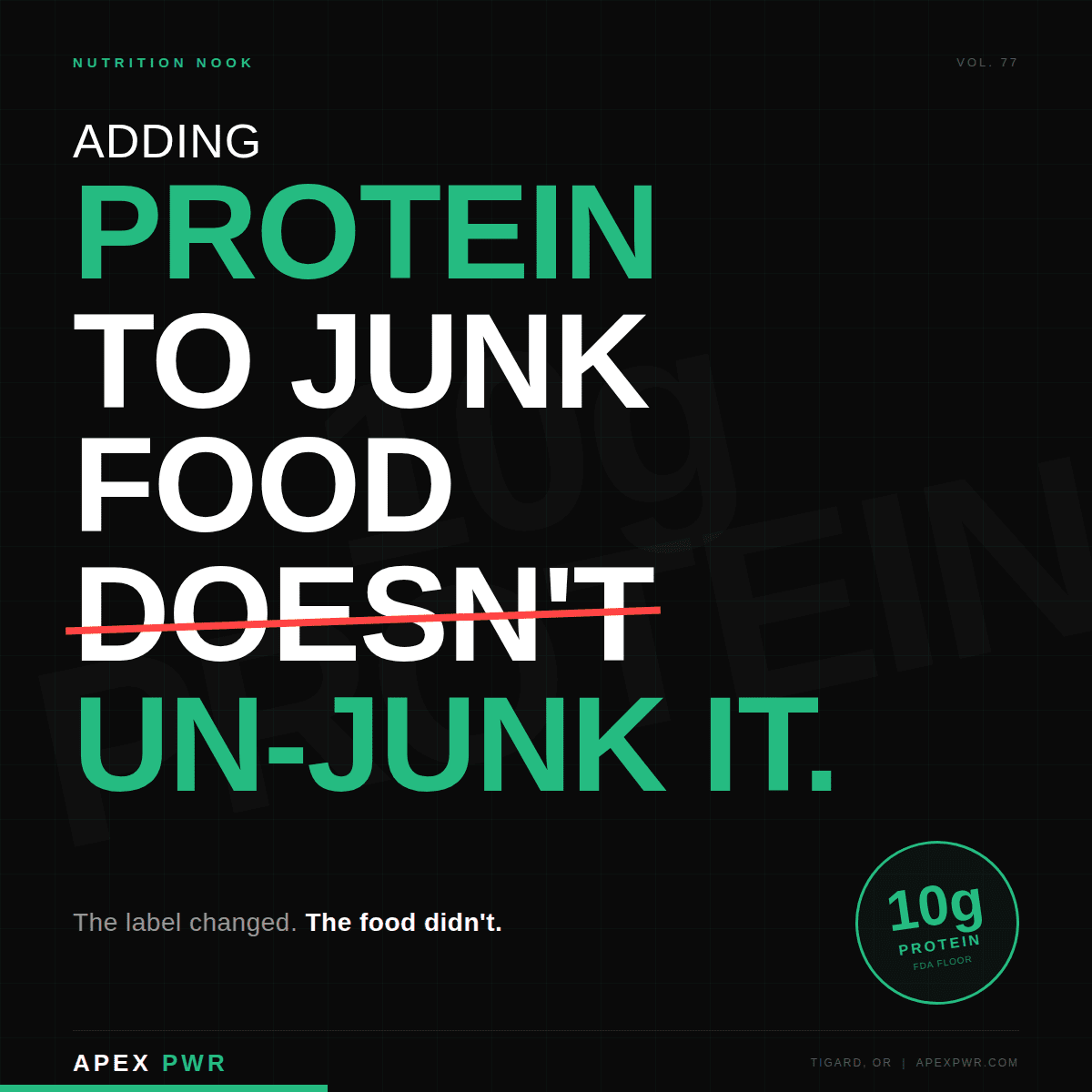
Adding Protein to Junk Food Doesn't Un-Junk It
Walk down any grocery aisle in 2026 and you'll see the same trend everywhere. Protein Doritos. Protein Pop-Tarts. Protein cereal. Protein cookies. Protein pretzels. Brands have figured out that stamping "10g PROTEIN" on the front of a package makes shoppers feel better about what's in the cart.
As the nutrition team in Tigard, Oregon working with hundreds of busy parents and professionals each year, we hear the same question constantly: "Is this version actually better for me?" The honest answer, based on what the FDA actually requires, what the food science research shows, and what we see in our own clients' DEXA scan data: usually not.
The "high protein" label is a marketing strategy. It is not a health upgrade. The food itself, the calories, and the way it's engineered to be overeaten have not changed.
What "High Protein" on a Label Actually Means
Under FDA regulation 21 CFR 101.54(b), a food can carry a "high" nutrient content claim if it contains 20% or more of the Daily Value for that nutrient per serving. Protein's Daily Value is 50 grams. The math is simple: any product with at least 10 grams of protein per serving qualifies, no matter what else is in it.
For context, one serving of Greek yogurt has 15 to 17 grams of protein. Three eggs deliver about 18 grams. A 4 ounce chicken breast carries roughly 26 grams. The 10 gram threshold is a regulatory floor, not a meaningful nutritional benchmark. A bag of chips can hit it, technically not be lying on the label, and still be the same chip it always was.
Four Reasons Protein-Added Junk Food Falls Short
01
The Calories Don't Move
A serving of the new Protein Doritos contains 150 calories, 8g of fat, and 10g of protein. A serving of regular Nacho Cheese Doritos contains 150 calories, 8g of fat, and 2g of protein. Same calories. Same fat. Same crunch and seasoning profile engineered to keep you eating. The protein number changed. Almost nothing else did.
Calories remain the unit that governs body composition. Overeat any macronutrient, protein included, and the surplus gets stored. Hitting a daily protein target through chips and pastries is a math problem you cannot win, because the calorie and ultra-processed-food load comes along for the ride.
02
The Food Is Still Engineered to Be Overeaten
In 2019, Dr. Kevin Hall and his team at the National Institutes of Health published a randomized controlled trial in Cell Metabolism that compared ultra-processed diets to whole-food diets matched for calories, protein, fat, carbohydrate, sugar, sodium, and fiber. Despite the macros being identical, participants ate roughly 500 more calories per day on the ultra-processed arm. They also gained measurable weight in two weeks.
Adding protein to a hyperpalatable snack does not change its hyperpalatability. The crunch, salt, fat, and bold seasoning are designed by food scientists to override the body's normal stop signals. A protein-fortified version of an engineered snack is still engineered.
03
The Food Matrix Matters
Research on the "food matrix" (van Vliet et al., 2021, Journal of Nutrition; Mattes and colleagues at Purdue) shows that the structure of a food influences satiety hormone release, gastric emptying speed, and total downstream intake, even when isolated nutrients look the same on paper. Whole-food protein sources reliably raise GLP-1 and PYY (the hormones that signal fullness) and slow gastric emptying. Highly processed protein delivered inside a hyperpalatable, low-volume, high-reward snack does not produce the same response with anywhere near the same reliability.
Translation: 10 grams of protein from eggs and 10 grams of protein from a fortified chip are not interchangeable signals to your appetite system, even though they look identical on a nutrition facts panel.
04
The Real Problem Gets Hidden
If hitting your protein target requires Pop-Tarts, the issue worth solving is not "where do I find more protein." The issue is that the rest of your day isn't built around protein-containing whole foods. Most adults working with our staff nutritionist Jennie Carolan find that once they anchor each meal around a real protein source (eggs, Greek yogurt, cottage cheese, chicken, fish, lean beef, legumes), the daily target lands without help from packaged snacks.
Reaching for protein-labeled junk food to close the gap is a symptom that meal structure needs work. Coaching can fix that in a few weeks. A bag of chips cannot.
The Doritos Comparison, Side by Side
| Per Serving (28g) | Protein Doritos | Regular Doritos |
|---|
| Calories | 150 | 150 |
| Total Fat | 8g | 8g |
| Total Carbs | 8g | 17g |
| Protein | 10g | 2g |
| Sodium | 150mg | 170mg |
| Hyperpalatable, designed to be overeaten? | Yes | Yes |
Identical calorie load. The carbs got swapped for protein. The food itself, and the relationship most people have with it, stayed the same.
Eat the snack if you enjoy it. Just don't eat it because you think it's healthy.
What Actually Works: Whole-Food Protein Anchors
Hitting 0.7 to 1.0 grams of protein per pound of body weight is achievable for most adults using whole foods alone. A simple framework that we use with nutrition clients in Tigard:
- Breakfast: 3 eggs and a cup of Greek yogurt = ~33g
- Lunch: 5oz grilled chicken on a salad = ~38g
- Snack: cottage cheese with berries = ~14g
- Dinner: 6oz lean beef or salmon = ~42g
- Daily total: ~127g, well above the target for a 160 to 180 pound adult, with no fortified snacks needed
This is what nutrition coaching looks like in practice. Not a meal plan you can't sustain. A framework that lands the target, fits into your week, and stops the cycle of leaning on packaged "high protein" products that aren't doing what the label promised.
Work With a Nutritionist in Tigard, Oregon
Build a protein and nutrition framework that actually fits your life, with a coach who knows the difference between marketing and metabolic outcomes.
Explore Nutrition CoachingHow APEX PWR Supports More Than Just Nutrition
At APEX PWR, located at 11105 SW Greenburg Rd in Tigard, Oregon, nutrition coaching is one part of an integrated performance wellness program. We serve the greater Portland metro area, and most of our members work with multiple sides of our team because nutrition, training, and recovery influence each other constantly.
Nutrition Coaching
One-on-one work with our staff nutritionist Jennie Carolan. Personalized targets, real-life meal structure, accountability.
Group & Personal Strength Training
Coached small-group and 1:1 strength sessions led by Kellen and the APEX team. Progressive overload, no guesswork.
Physical Therapy
In-house PT with Jordan, integrated with your training so injuries get addressed without stopping your progress.
DEXA Body Composition Scans
Track lean mass, body fat, and bone density with the gold-standard imaging tool. The only way to know if your nutrition plan is actually working.
For new members, we package these services together so the strategy across nutrition, training, recovery, and progress tracking stays aligned from day one. That's how you get a real answer to "is what I'm doing working," instead of guessing based on the scale or the label on a snack bag.
The APEX Team
Sources: U.S. Food and Drug Administration, 21 CFR 101.54(b), Nutrient Content Claims for "Good Source," "High," and "More"; Hall, K.D. et al. (2019), "Ultra-Processed Diets Cause Excess Calorie Intake and Weight Gain," Cell Metabolism, 30(1): 67-77; van Vliet, S. et al. (2021), "The Skeletal Muscle Anabolic Response to Plant- versus Animal-Based Protein Consumption," Journal of Nutrition; Mattes, R.D., Purdue University ingestive behavior research on food structure and satiety; FDA Daily Value reference (50g protein, 2,000 calorie diet). This article is informational and is not a substitute for individualized nutrition advice. Protein needs vary based on activity level, age, body composition goals, and medical history.