Strength Training in Tigard, Oregon | APEX PWR | Lessons in Longevity
Key Takeaways
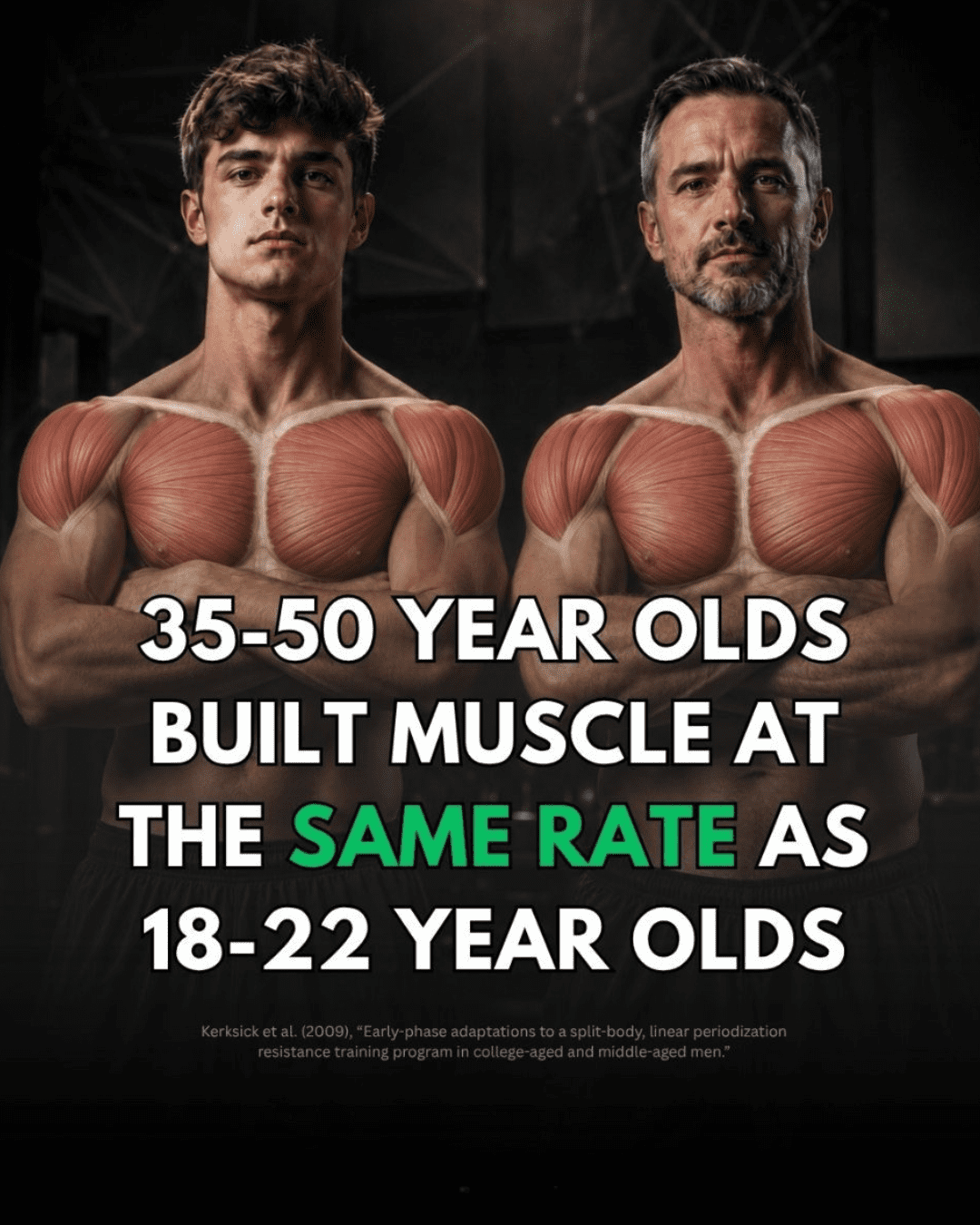
An 8-week resistance training study compared 24 men aged 18-22 with 25 men aged 35-50 on the same structured program. Both groups significantly increased bench press 1RM, leg press 1RM, and DXA-measured lean body mass.
The middle-aged group lost significantly more body fat than the college-aged group over the 8 weeks.
The takeaway is not that age does not matter. The takeaway is that age is rarely the bottleneck. Programming, effort, and consistency are.
Lean muscle mass is best measured by DXA (DEXA) scanning, the same technology used in the study. APEX PWR offers DEXA scans in Portland at our Tigard facility.
Strength and power, the qualities that matter most for daily life and long-term function, are measured directly with VALD force testing as part of our Longevity Performance Assessment.
The path forward is the same one the study used: structured programming, four sessions per week of resistance training, and showing up.
The Life Most of Us Wake Up In Around 40
You can probably picture the arc. In college you were active without thinking about it. Intramurals, walking everywhere, eating whatever, sleeping whenever. Your 20s came with more responsibility, but you still had the energy to bounce. Maybe you played pickup. Ran a half marathon. Did CrossFit for a stretch.
Then your 30s arrived. Career got real. Kids came, or pets came, or the mortgage came, or the promotion came. Sleep got compressed. The workouts that used to anchor your week became the thing you would get to. Maybe you stayed on it for a year and then you did not.
And now you are in your 40s. You look in the mirror and you do not quite recognize the slide. The stairs feel different. The pickup game leaves you sore for three days. Body composition has crept the wrong direction. The easy explanation is the one most people reach for: I am just getting older.
We hear this every week in Tigard. Here is the part we want you to hear before we get to the data: aging is real, but most of what you are feeling is not aging. It is a decade or more of structured training getting replaced by a decade of structured everything else. That distinction matters, because one of those is reversible.
What the Research Actually Found
A 2009 study from Kerksick and colleagues, published in the Journal of Strength and Conditioning Research, took a clean look at this question. They put two groups of men through the same 8-week strength program: 24 college-aged guys (18 to 22), and 25 middle-aged guys (35 to 50). Same program. Same effort expectations. They measured what happened.
The Setup (Kerksick et al., 2009 · PMID 19387379)
Who: 24 men aged 18-22, 25 men aged 35-50
How long: 8 weeks
The program: 4 sessions per week (2 upper, 2 lower), progressive loading
What they measured: Bench press 1RM, leg press 1RM, DXA lean body mass
After 8 weeks, both groups significantly increased bench press strength, leg press strength, and DXA-measured lean body mass. In plain terms, the 35-50 guys did not meaningfully fall behind the 18-22 guys on muscle and strength gains during the early-adaptation window.
There is also a finding from this study that does not get repeated enough: the middle-aged group lost significantly more body fat than the college-aged group over the same 8 weeks. Both groups got stronger. Both built lean tissue. One group also got noticeably leaner.
The Honest Caveats
We try not to oversell single studies, so here is the fine print:
This was 8 weeks. The early window is when new and returning trainees respond fastest. Results over 6 to 12 months may look different.
The middle-aged group was 35 to 50, not 70. Findings should not be stretched to the elderly without separate evidence for that group.
DXA lean body mass is a strong proxy for muscle, but it is not exactly the same thing as pure contractile muscle tissue. The label matters.
The study was on men. The broader research on women in this same age range is consistent in direction, with extra context around perimenopause that affects bone, recovery, and how training should be programmed.
Aging does affect your training response. Recovery takes longer. Joint history accumulates. Hormones shift. None of that disqualifies you from building muscle in your 40s. What it does is raise the value of structured programming and patient consistency over hard, scattered training.
The research does not say age stops mattering. It says age is rarely the bottleneck. Programming, effort, and consistency are.
The Two Measurement Tools That Matter
One of the reasons this study is useful is because of how it measured what it measured. The Kerksick group used DXA for lean body mass and a 1RM bench press and leg press for strength. Same tools we use at APEX, on the same kinds of clients, every day.
DEXA Scan for Lean Muscle Mass
The bathroom scale cannot tell you if you are gaining muscle. The mirror is a slow and biased reporter. DXA, also called DEXA, is the gold-standard measurement for body composition: lean muscle mass, total and regional body fat, visceral fat, and bone mineral density. It is the same measurement technology the Kerksick study used.
For anyone who wants to know whether their training is actually changing their body composition, baseline and follow-up DEXA scans at APEX PWR in Portland, Oregon are the most informative number you can get. We recommend an annual DEXA starting in your 30s for bone density check-ins, and more frequently if you are actively trying to change body composition.
VALD Force Testing for Strength and Power
Lean mass tells you what you carry. Strength and power tell you what you can do with it. Daily-life function and long-term injury resilience track more closely with strength and power than they do with muscle volume alone.
APEX uses VALD force testing technology, including ForceDecks and ForceFrame, to measure neuromuscular qualities directly: force production, left-right asymmetry, rate of force development, balance, and power output. Our Longevity Performance Assessment is a 30-minute, data-driven snapshot of those qualities, individualized to your age, fitness level, injury history, and goals.
The pair is useful: DEXA tells you whether you are building muscle. VALD tells you whether that muscle is doing something for you.
What "Structured Training" Actually Looks Like
The Kerksick subjects did not do random workouts. They followed a structured plan: a split-body program with progressive loading, four sessions per week, for 8 weeks. That structure is most of why it worked.
At APEX, structured training looks similar in shape, scaled to where you actually are:
Major movement patterns covered weekly: squat, hinge, push, pull, carry
Progressive loading week to week, not constant variety for its own sake
Sets in the 6 to 12 rep range as the bulk of weekly volume, with strength work layered in
3 to 4 sessions per week as a starting target, with rest days that actually allow recovery
Coach-led technique correction, especially in the first 4 to 6 weeks
That last point is where most adults stall when they try to build muscle on their own. Not because they cannot do the work, but because nobody is watching the work get done. A bench press with a flared elbow and a bouncing bar can run for years without producing what it should. Same for a squat that does not load the hips. Coaching closes that gap quickly.
The Message: You Just Need to Show Up
Go back to the arc from the top of this article. The 40s version of you that does not quite match the mirror did not show up because you got old. It showed up because for a decade, the structured work that used to anchor your week got replaced by everything else.
The research is on your side. Adults in their 35-50 range build muscle. They get stronger. They lose body fat. The body still adapts, and it adapts well, when the work is structured and you keep showing up.
APEX has the plan. We have the coaches. We have the testing metrics with DEXA and VALD. We have the equipment in 10,000 square feet in Tigard, Oregon. What we cannot do is show up for you. That part is yours, and it is the smallest part of the lift.
If the past decade has been "I will get to it," the next one does not have to be.
Start with the Strength Training Foundations Trial
One-on-one with an APEX coach. Baseline assessment, movement patterns, and the first session of a structured plan. The fastest way to see whether APEX is the right fit before committing to anything bigger.
Strength Training in Tigard, Beaverton, Tualatin, and the Portland Metro
APEX PWR is located at 11105 SW Greenburg Rd in Tigard, Oregon, just across 217 from Washington Square. We serve adults from across the Portland metro area, including Beaverton, Tualatin, Lake Oswego, Hillsboro, and Portland proper. Group training, one-on-one personal training, and physical therapy are all available under one roof.
For deeper reading on related topics from the Lessons in Longevity series:
Yes. The Kerksick et al. (2009) study covered men aged 35 to 50, which includes the 40s decade. The 40+ subjects gained muscle and strength at rates comparable to men aged 18 to 22 over 8 weeks of structured resistance training. The broader research is consistent: muscle and strength gains are achievable through your 40s, 50s, and beyond with the right programming.
Is it too late to start strength training in my 40s?
No. The early-adaptation window for new and returning trainees is when the body responds fastest, regardless of starting age. Starting later is not the disqualifier. Starting without structure is the common bottleneck.
Can you still build muscle after 35?
Yes. The Kerksick et al. (2009) study showed that men aged 35 to 50 significantly increased bench press 1RM, leg press 1RM, and DXA-measured lean body mass over 8 weeks of structured resistance training, at rates comparable to men aged 18 to 22. The middle-aged group also lost significantly more body fat over the same 8 weeks.
How often should adults over 35 strength train?
The study used 4 sessions per week split as 2 upper-body and 2 lower-body workouts. The American College of Sports Medicine recommends resistance training for all major muscle groups at least 2 days per week for adults. For meaningful body composition change, 3 to 4 structured sessions per week is a reasonable starting target.
How can I measure if I am actually gaining muscle?
DXA (DEXA) scanning is the most reliable measurement available outside of a research lab. It directly measures lean muscle mass, body fat percentage, regional distribution, and visceral fat. APEX PWR offers DEXA scanning at our Tigard facility, the same measurement technology used in the Kerksick study.
Where is the best place for strength training in Tigard, Oregon?
APEX PWR offers structured strength training for adults of all ages and experience levels at our Tigard facility. New members typically start with our Strength Training Foundations Trial, a one-on-one introductory session with a coach.
Does APEX PWR serve clients from Beaverton, Tualatin, and Lake Oswego?
Yes. APEX PWR is located in Tigard at 11105 SW Greenburg Rd, just across 217 from Washington Square, and serves clients from Beaverton, Tualatin, Lake Oswego, Hillsboro, and Portland.
Strength Training for Women and Bone Density: What Perimenopause Does to Your Skeleton | APEX PWR Tigard & Beaverton APEX PWR | Female Fitness Strength Training for Women and Bone Density: What Perimenopause Actually Does to Your Skeleton By The APEX Team | Tigard & Beaverton, Oregon | October 21, 2026 Key Takeaways Bone loss
Grip Strength, Force Plates, and the Numbers That Track How You Are Aging | APEX PWR Tigard & Beaverton APEX PWR | Lessons in Longevity Grip Strength, Force Plates, and the Numbers That Actually Track How You Are Aging By The APEX Team | Tigard & Beaverton, Oregon | October 21, 2026 Key Takeaways In
6 Nutrition Label Hacks That Take 10 Seconds and No App | APEX PWR Tigard & Beaverton APEX PWR | Nutrition Nook 6 Label Hacks That Take 10 Seconds and No App By Jennie Carolan, MS, Nutrition Director | Tigard & Beaverton, Oregon | October 14, 2026 Slides from the original post by Jennie Carolan,